5 Cost Factors of a Concrete Coating Project
Concrete coating cost depends on five things: concrete condition, product, prep, customizations, and size. Here is what each factor does to your project price.


The best garage floor coating for almost every Central Oregon homeowner is a hybrid system: an aromatic polyurea basecoat with a polyaspartic aliphatic polyurea topcoat. That combination gives you the strength and flexibility of pure polyurea where it matters most, plus the UV stability and workability of polyaspartic where the floor meets sunlight. Epoxy is cheaper but fails in 3 to 5 years. Cementitious urethane is built for commercial use, not garages. Pure polyaspartic on raw concrete delaminates within a decade.
Here is the full breakdown of the four main garage floor coating options.
Epoxy is a two-part synthetic resin that bonds to the top surface of your concrete. It has been the default garage floor coating for decades because it is affordable, widely available, and comes in DIY kits at every big box store.
The strengths of epoxy are real. It is the cheapest option upfront, it provides a glossy finish, and it comes in many colors. For low-traffic interior spaces with stable temperatures and no UV exposure, it can perform reasonably well.
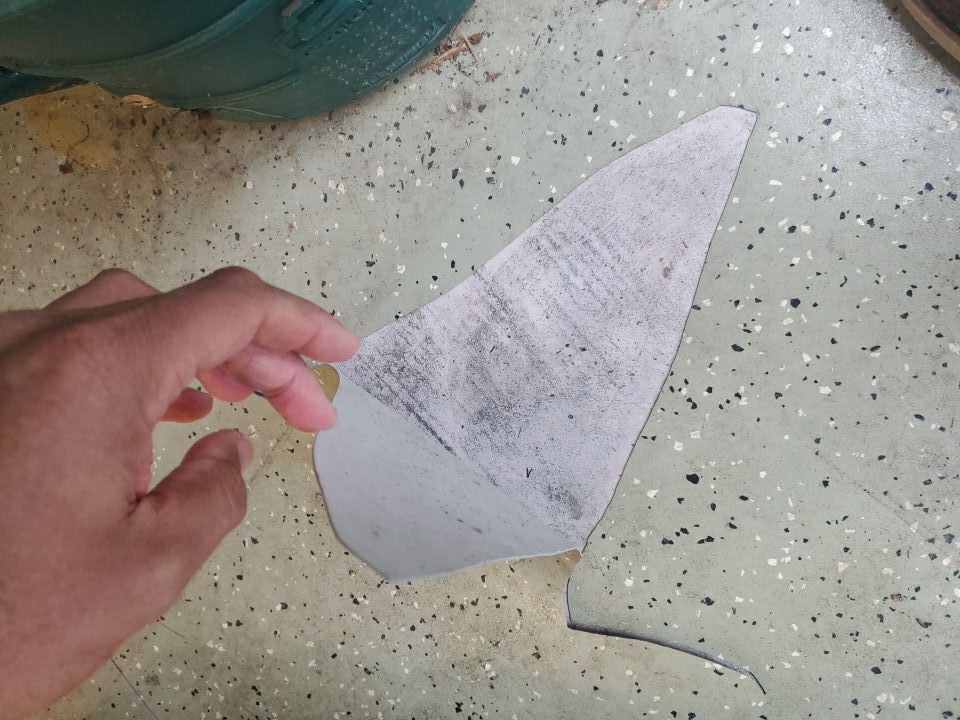
The weaknesses are also real, and they show up fast in Central Oregon. Epoxy yellows in sunlight, gets brittle in cold weather, and is prone to hot tire pickup, where heat and tire weight lift the coating right off the concrete. It lasts 3 to 5 years before requiring recoat or replacement.
Over a 20-year ownership window, that is four to five rounds of epoxy at $3,000 to $5,000 each. The math is not close.
Best for: Low-traffic indoor concrete with no sunlight, where lifetime cost is not a priority.
Avoid for: Working garages, any space with UV exposure, freeze-thaw climates like Central Oregon.
Polyurea is a synthetic coating made by combining isocyanates with resin blends. The chemistry produces a flexible, durable surface that bonds with the moisture inside your concrete rather than just sitting on top of it.
Pure aromatic polyurea is the toughest concrete coating on the market. It is 4x stronger than epoxy, 10x more flexible, and forms a chemical bond with the slab that resists peeling and chipping. It cures fast, which makes it great for one-day installs but harder to apply correctly. Professional installation is required.
The one weakness of aromatic polyurea is UV stability. Used as a topcoat in direct sunlight, certain varieties can yellow over time. That is why polyurea is almost always used as the basecoat in a multi-layered system, with polyaspartic on top to lock in the color.
Best for: Basecoat layer on any garage floor. The strongest, longest-lasting concrete coating chemistry available.
Avoid for: Topcoat in sun-exposed garages without polyaspartic over it.
Polyaspartic is technically a subtype of polyurea with a slowed cure rate. The chemistry is similar, but the slower cure makes polyaspartic easier to apply, more forgiving for installers, and consistently UV stable when used as a topcoat.
Polyaspartic also has lower VOCs, which means less odor during installation and a faster return to use. As a finish layer, it adds gloss, scratch resistance, and color stability that aromatic polyurea cannot match on its own.
The catch is that polyaspartic applied directly to raw concrete as a basecoat tends to form only a surface bond. That surface bond fails over time as concrete naturally expands, contracts, and cracks. Polyaspartic on raw concrete delaminates within 3 to 7 years.
Best for: Topcoat layer over a polyurea basecoat. The best UV-stable finish for garage floors.
Avoid for: Standalone full-system coating directly on raw concrete.
Cementitious urethane is composed of cement, water, aggregate, and chemical additives. It was developed for food and beverage facilities and is the standard coating for commercial kitchens, warehouses, breweries, and manufacturing floors.
It is seamless, self-leveling, wear-resistant, and resists stains and chemicals. It also costs significantly more than polyurea or polyaspartic, requires professional installation, and has limited color options.
Webfoot does not recommend cementitious urethane for residential garages. It is overbuilt for home use, more expensive than necessary, and the color and finish options are restrictive compared to a polyurea-polyaspartic system.
Best for: Commercial kitchens, food processing, breweries, high-traffic warehouses.
Avoid for: Residential garages.
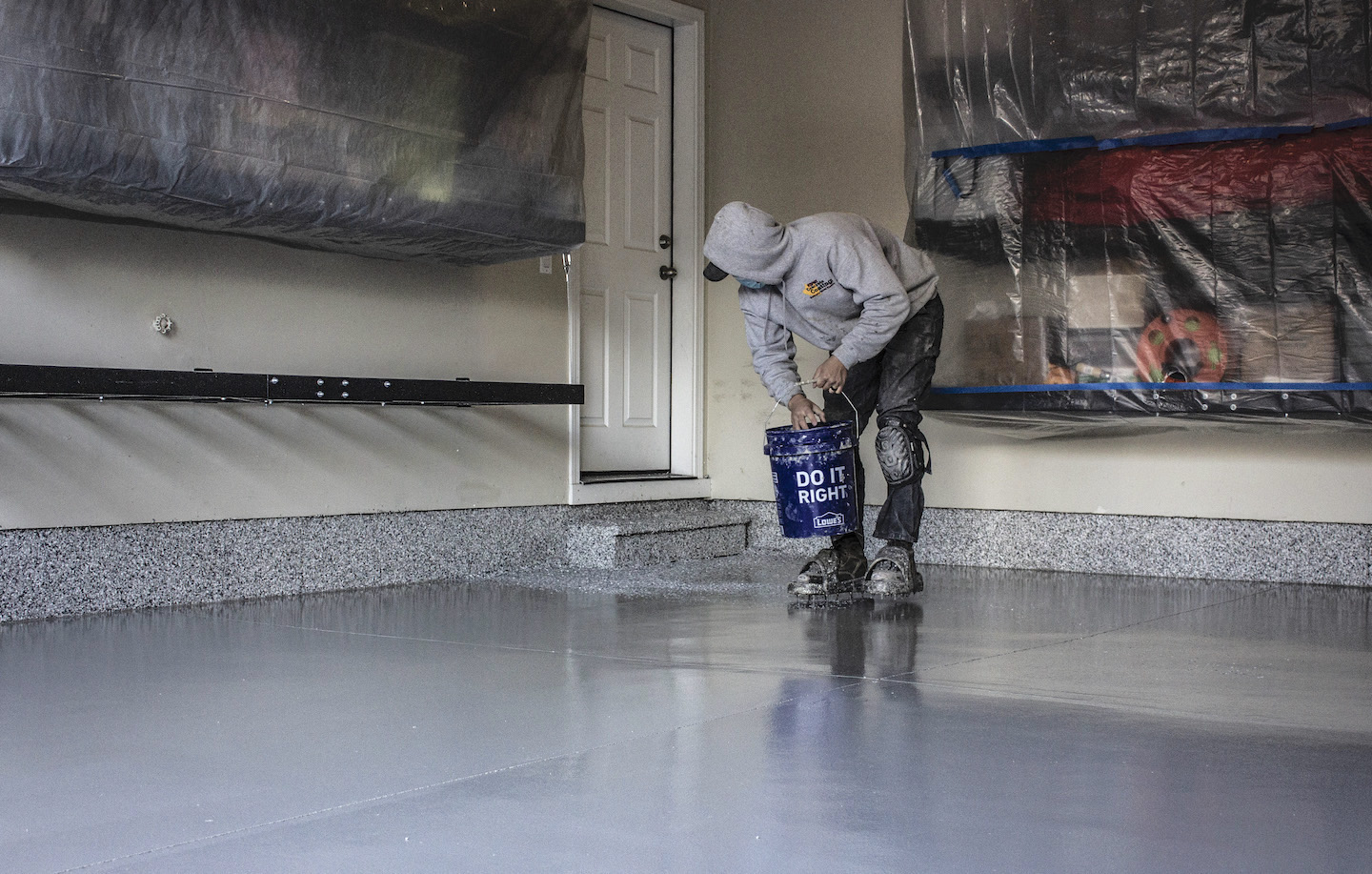
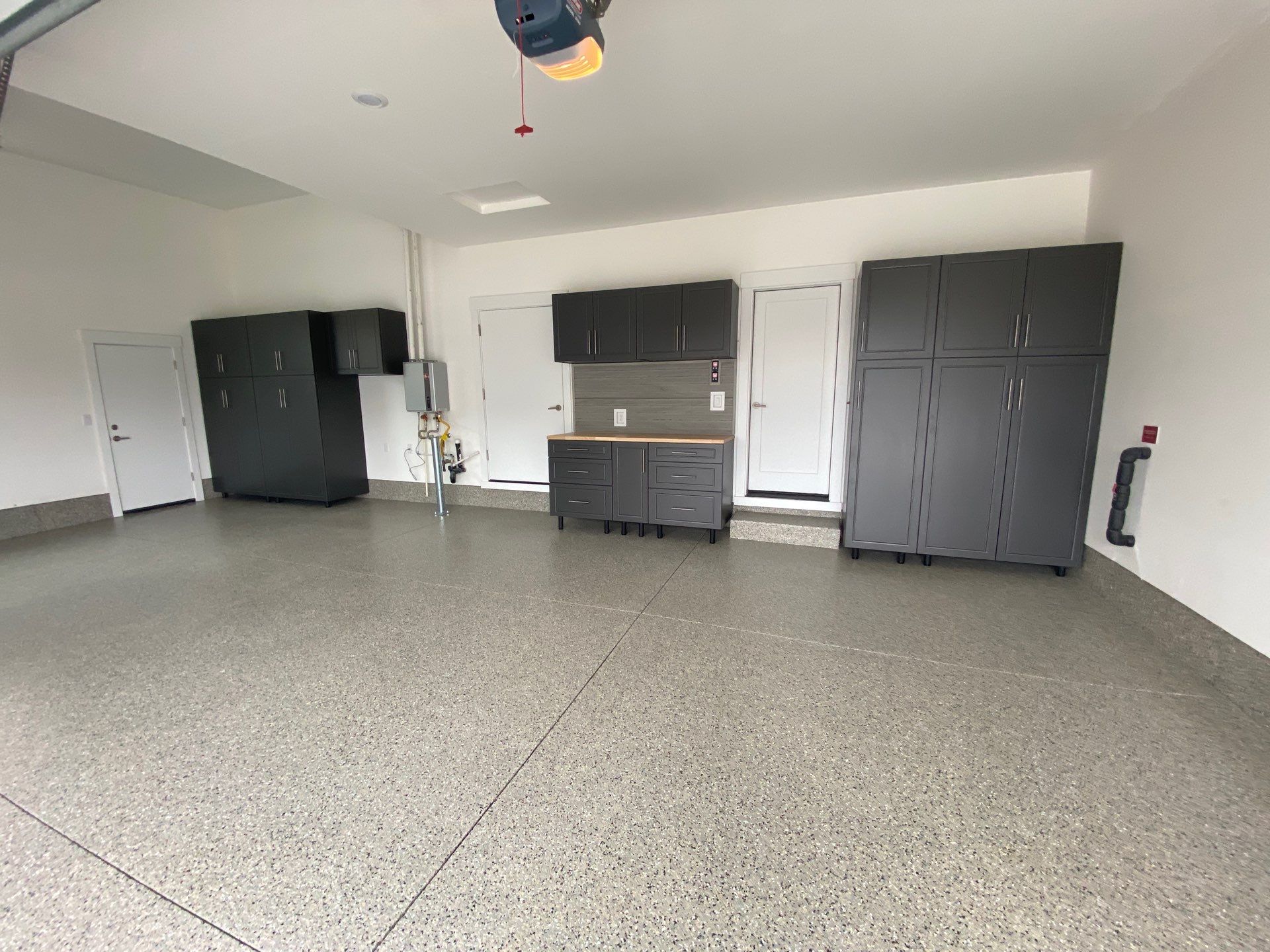
The best garage floor coating uses both polyurea and polyaspartic, in the right layers. Webfoot installs every floor with an aromatic polyurea basecoat and a polyaspartic aliphatic polyurea topcoat.
That combination gives you:
The strength and flexibility of pure polyurea where it matters most, bonded chemically into the slab.
The UV stability and color hold of polyaspartic where the floor meets sunlight.
The longer working time of polyaspartic for the topcoat layer where install precision matters.
A one-day install, walkable in 12 hours, drivable in 24.
A limited lifetime residential warranty covering chipping, peeling, and delamination.
This is not a marketing position. It is the chemistry. A pure polyurea floor without a polyaspartic topcoat sacrifices UV stability. A pure polyaspartic floor without a polyurea basecoat sacrifices adhesion and lifespan. Combining them is the only way to get the full performance window both materials can deliver.
If you are evaluating contractors, here is what to ask.
If a contractor offers epoxy, expect failure within 5 years in Central Oregon. Plan to replace or recoat.
If a contractor offers polyaspartic-only or polyaspartic-on-raw-concrete, ask what the basecoat is. If the answer is polyaspartic, expect surface-bond failure within 3 to 7 years.
If a contractor offers polyurea-only without a polyaspartic topcoat, ask about UV stability. If your garage gets sun exposure, expect color shift.
If a contractor offers cementitious urethane for your residential garage, ask why they are recommending a commercial product.
If a contractor offers a hybrid system with a polyurea basecoat and a polyaspartic topcoat, that is what you want. That is what Webfoot installs.
The total cost will depend on the size of your floor, the condition of the existing concrete, your color and chip selections, and the prep work required. For a ballpark estimate in about 60 seconds, try our instant estimate tool.
Polyurea vs epoxy head-to-head: Polyurea vs Epoxy Garage Floor Coatings.
Polyurea vs polyaspartic compared: Polyurea vs Polyaspartic: Which Garage Floor Wins?
Six specific reasons to skip epoxy: 6 Reasons to Never Use Epoxy on Your Garage Floor.
A polyurea coating job in Bend: Garage Transformation in Bend OR.
Service page: Garage Floor Coatings in Bend Oregon.
Webfoot installs hybrid polyurea and polyaspartic concrete coatings year-round across Bend, Redmond, Sisters, and Sunriver. Free estimates, lifetime warranty, one-day install.
Get a free estimate or call 541-390-0590.