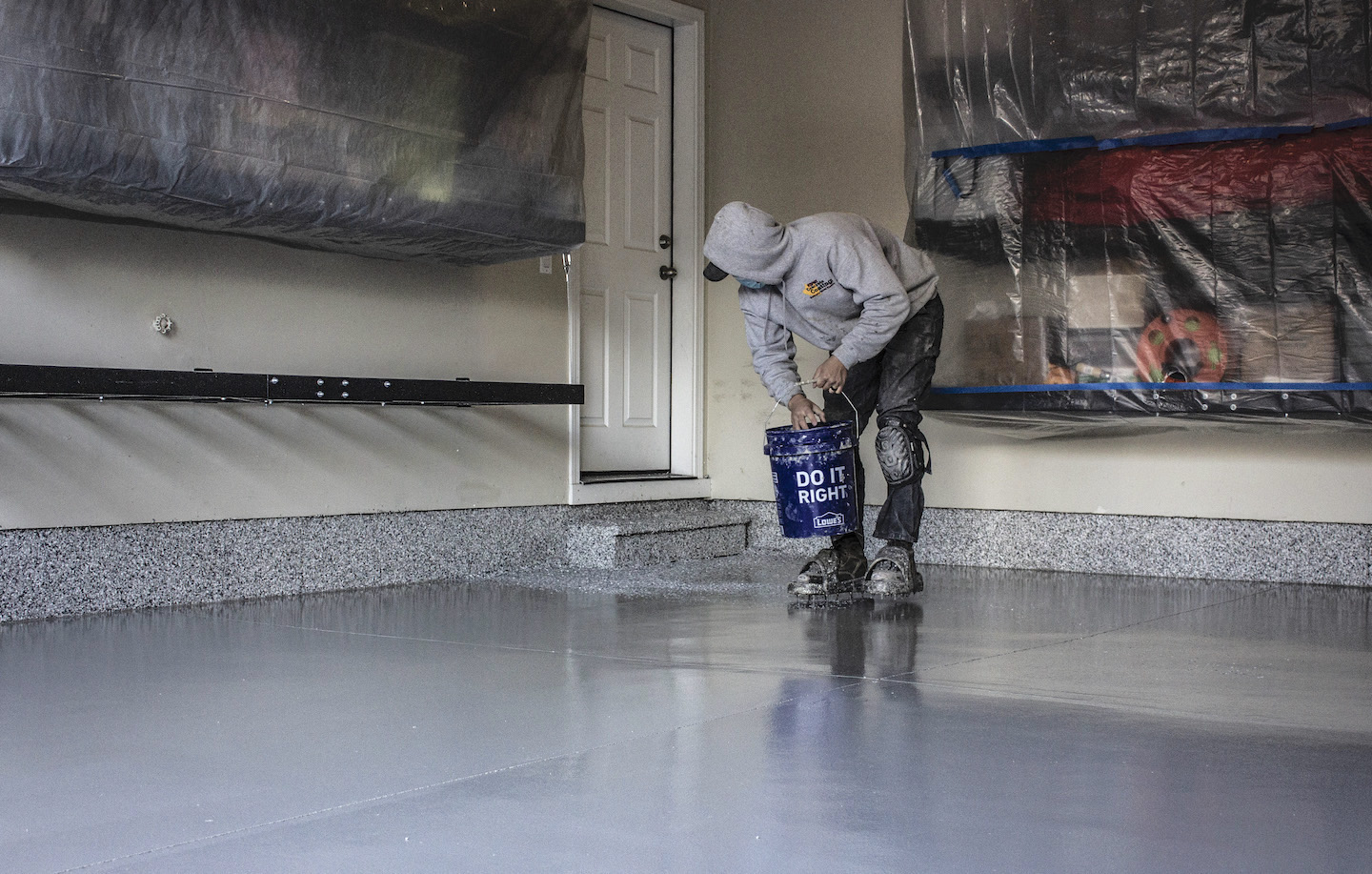
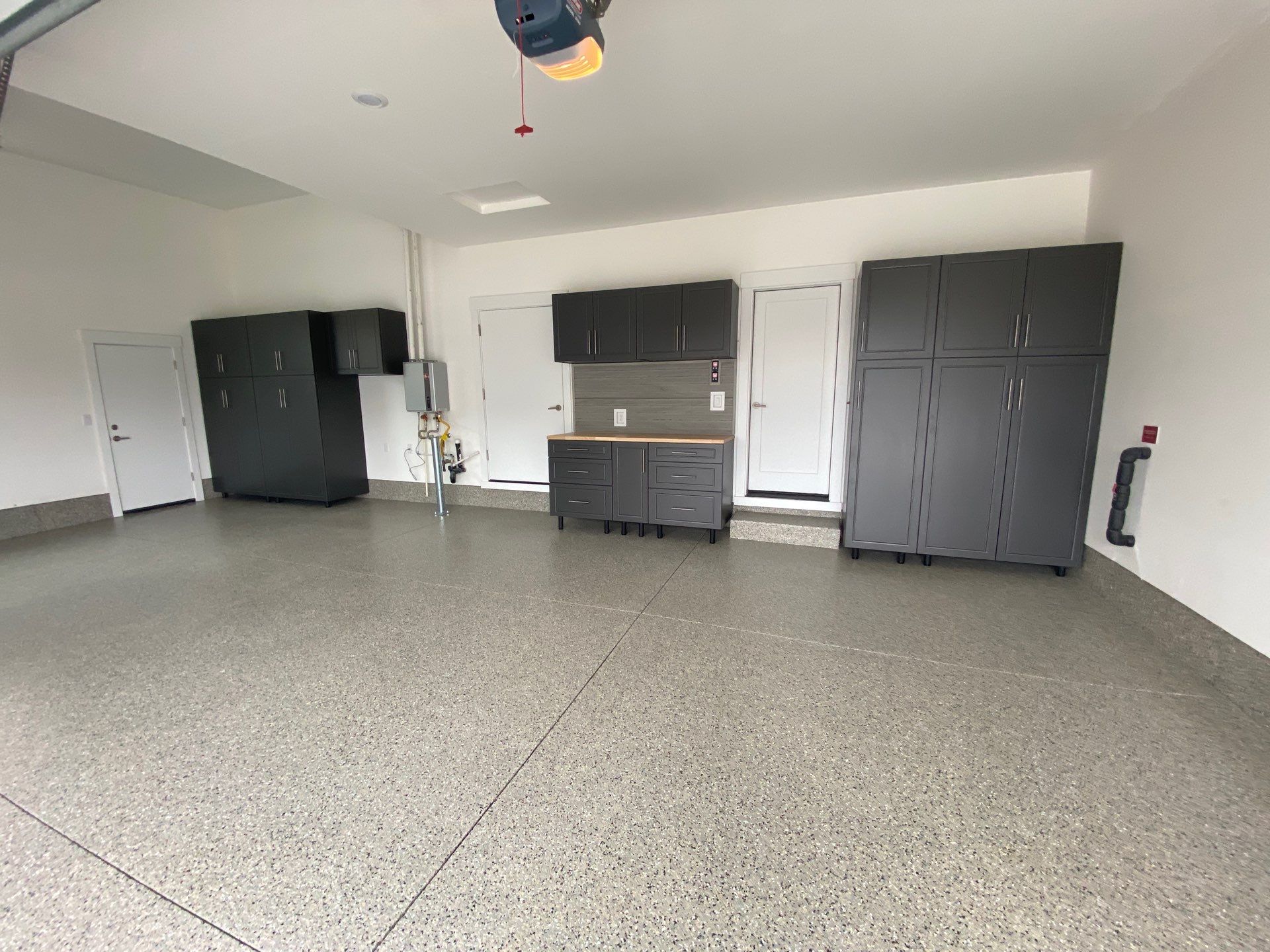
5 Cost Factors of a Concrete Coating Project
Concrete coating cost depends on five things: concrete condition, product, prep, customizations, and size. Here is what each factor does to your project price.

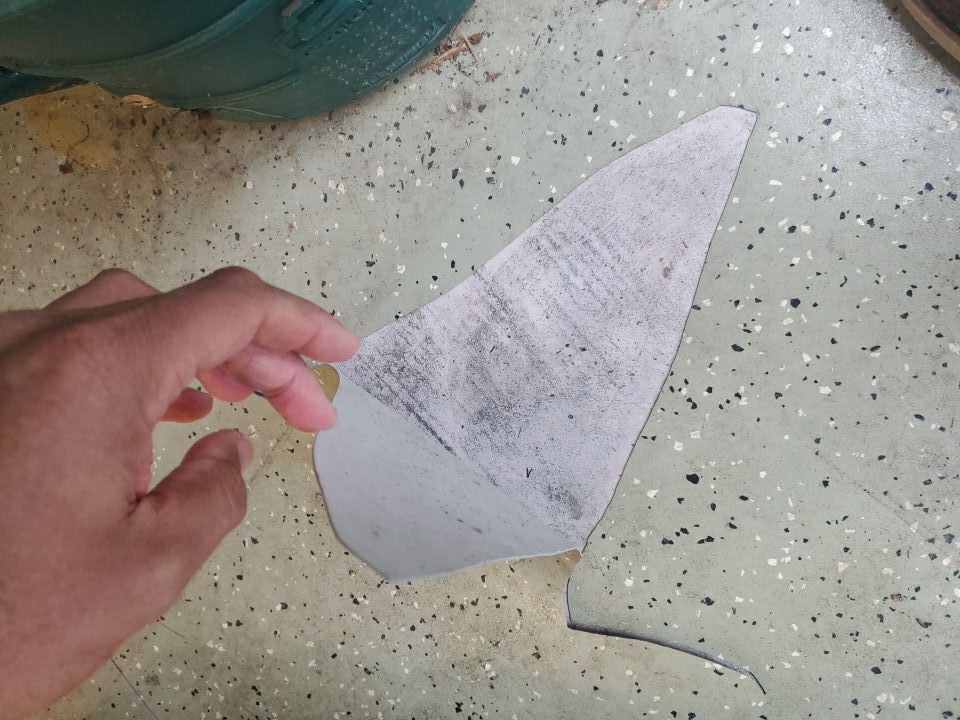
Last year, more than one out of every ten concrete coating jobs we completed in Central Oregon was fixing a floor that already had a coating on it. Not a new floor. Not fresh concrete. A floor someone had already paid to coat, usually with epoxy, that had since peeled, flaked, bubbled, or failed badly enough that they called us to start over.
We've been doing this since 2003. We've seen a lot of floors. And the frequency of these removal jobs is going up, not down. So we want to be straight with you about what we see, what it costs, and why we stand behind our work the way we do.

Since 2019, we've removed and replaced more than one coating a month, every month, for six straight years. In 2025 alone, the removal rate hit 10.4% of all our coating work, the highest we've ever recorded.
These aren't edge cases. They're homeowners who made a reasonable decision, paid real money for it, and got a floor that stopped performing. Some lasted two years. Some lasted five. A few held on longer but finally gave out. At some point, they all ended the same way: a grinding machine in the garage and a Webfoot crew starting from scratch.
Of those removal jobs, not one involved a Webfoot polyurea install. Every single failed coating we've removed was applied by someone else. We're not saying that to brag. We're saying it because it's the truth and it matters when you're deciding what to put on your floor.
The most common culprits: DIY epoxy kits from a home improvement store, or budget-priced contractor epoxy installed without proper concrete profiling. We've also removed work done by larger operations that use thin-mil epoxy systems as their entry-level product. The material matters. So does the prep.

Epoxy isn't inherently a bad product. Applied correctly by a skilled installer on properly prepared concrete, a professional-grade epoxy system can hold up well for years. Some do.
And yes, polyurea costs more upfront than many epoxy options. If budget is your primary constraint and you go the epoxy route, there's a real chance it performs just fine.
But here's the reality: you're rolling the dice. The failure rate we've documented firsthand is significant. Epoxy is moisture-sensitive, UV-reactive, and more brittle than polyurea under the temperature swings that Central Oregon delivers. When it fails, it fails visibly and completely.
Garage floors take a beating. Temperature swings from freezing winter nights to hot summer days, hot tire contact, oil, chemicals, and heavy use. Polyurea was engineered for exactly that environment. Epoxy was not. That's not an opinion, that's chemistry.
Here's what makes the epoxy gamble a bad financial bet, even when you factor in the lower upfront price.
Removing a failed coating and starting over isn't cheap. Based on our own data across removal jobs, the average homeowner pays about $932 more than if they'd come to us with a bare concrete floor from the start. The math on cheap doesn't always add up.
And that's just the money. There's also the hassle: emptying the garage again, the downtime, the noise, and the dust of a second grind-out. Nobody does that for fun.
Altogether, the Central Oregon homeowners who've come to us to fix failed coatings have spent hundreds of thousands on remediation work they never should have needed. That's not a small number.
Epoxy and polyurea look similar once they're on the floor. But they behave very differently over time, and those differences are exactly where we see epoxy fail.
Epoxy is UV-reactive. It yellows and degrades in sunlight. Most garage floors get direct sun through open doors, and that accelerates the breakdown. Polyurea is UV-stable. It won't yellow or degrade, which is why our installs look the same five years in as they did on day one.
Epoxy is brittle. It never fully cures, it just keeps hardening. Over time it becomes increasingly rigid, and it can't flex with the concrete underneath as it expands and contracts through temperature changes. Polyurea is four times more flexible, which means it moves with the slab instead of cracking away from it.
Epoxy is moisture-sensitive. Installation humidity has to be exactly right, and long-term moisture vapor from below the slab is a constant threat. Polyurea is vapor-permeable, handling moisture from below without delaminating.
Epoxy can pick up with hot tires. Park a hot car on a warm day and epoxy softens enough that tire rubber can pull it right off the floor. Polyurea resists hot tire pickup.

We also grind every floor we coat. Not acid-etch, not sweep-and-roll, grind. That mechanical surface profile is what gives the coating something to grip. Skipping or shortcutting that step is the single biggest cause of premature failure across the jobs we've been called in to fix.
.jpg)
We back every polyurea concrete coating we install with a limited lifetime warranty covering defects in the coating under normal residential use. We stand behind our work because we know what it's made of and how it's applied.
A warranty is only worth something if the company behind it is still around and intends to honor it. We've been in Bend since 2003. We're not going anywhere. Ask your project coordinator for full warranty details when you get your quote.
If your floor is bare concrete, come to us first. We'll give you an honest assessment, a real number, and a coating we'll back with our warranty. In most cases, the cost difference between our polyurea install and a budget epoxy job isn't as wide as people think, and the long-term cost comparison isn't even close.
If your floor already has a coating that's failing, we can help with that too. We've done it hundreds oftimes. We know how to get it out cleanly, get the concrete right, and give you a floor that actually lasts.
Either way, get a free quote before you decide. It costs you nothing and you'll know exactly what you're working with.
Professional-grade epoxy can last 5 to 10 years with proper prep and installation. DIY or budget epoxy products often start failing in 2 to 5 years, sooner in garages with heavy use, UV exposure, or temperature swings. Polyurea coatings, properly installed, are designed to outlast epoxy significantly. Our data shows a meaningful failure rate among epoxy-coated floors that end up being removed and replaced.
The most common causes are inadequate surface prep (the concrete wasn't ground properly before application), moisture in the slab, UV degradation, and the natural brittleness of epoxy under thermal expansion and contraction. Garage environments are particularly harsh for epoxy because they combine all of these factors.
Based on our completed jobs, the average cost to remove a failed coating and install a new polyurea system is roughly $932 more than a fresh install on bare concrete. If you factor in what you paid for the original coating that failed, the total cost of the cheaper option often exceeds what you would have paid doing it right the first time.
For most garage floors, polyurea is the better choice. It's UV-stable, more flexible, cures faster, and holds up better under the conditions a garage actually experiences. Epoxy can work well when installed correctly by a skilled professional, but it carries a meaningfully higher failure rate, particularly with budget products or when surface prep is rushed.
Yes. We back our polyurea concrete coatings with a limited lifetime warranty covering defects in the coating under normal residential use. Contact us or ask your project coordinator for complete warranty terms.
Yes. We serve Bend, Redmond, Sisters, Sunriver, La Pine, and throughout Central Oregon. Give us a call at 541.390.0590 or request a quote online to get started.