5 Cost Factors of a Concrete Coating Project
Concrete coating cost depends on five things: concrete condition, product, prep, customizations, and size. Here is what each factor does to your project price.


Polyurea garage floor coatings outperform epoxy in nearly every category that matters. Polyurea lasts 15 to 20 years versus 3 to 5 for epoxy. It cures in 24 hours versus 5 to 7 days. It stays flexible from -30°F to 300°F while epoxy turns brittle below 50°F. It does not yellow, peel, or hot-tire pickup. The trade-off is upfront cost: polyurea costs more to install, but the longer lifespan and lifetime warranty make it a better long-term investment for most Central Oregon homeowners.
Here is the full side-by-side breakdown.
Epoxy is a two-part coating made by combining a resin and a hardener. When mixed, the two parts chemically react and harden into a plastic-like surface that bonds to the top layer of your concrete. It has been the default garage floor coating for decades because it is affordable, widely available, and comes in DIY kits at every big box store.
The strengths of epoxy are real. It provides a glossy finish, comes in many colors, and is cheap to install upfront. For low-traffic interior spaces with stable temperatures and no UV exposure, it can perform reasonably well.
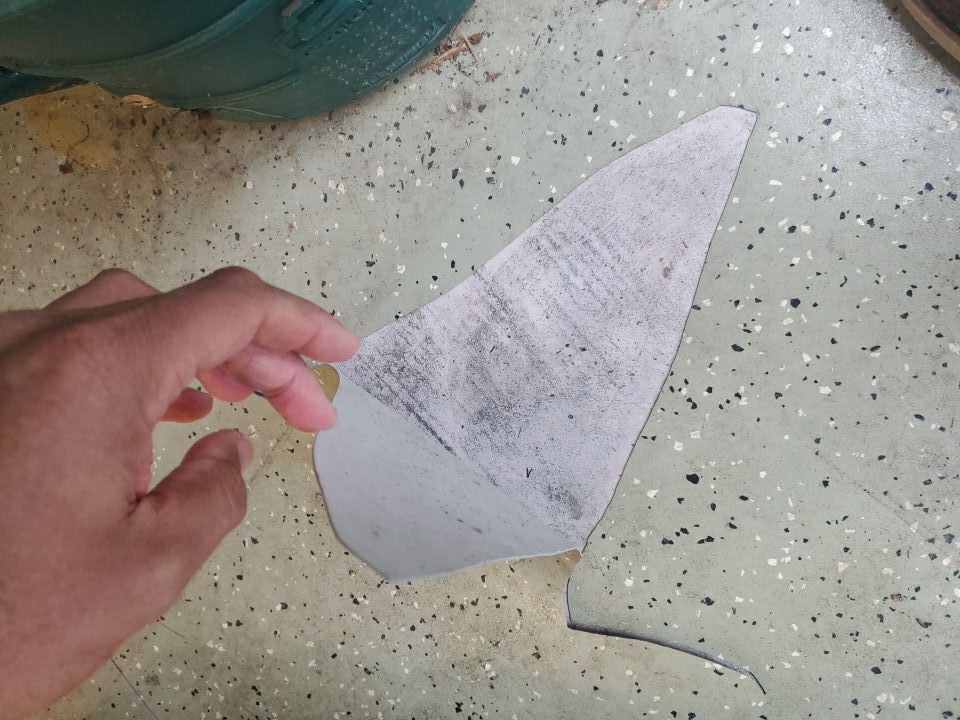
The weaknesses are also real, and they show up fast in Central Oregon. Epoxy is rigid. It does not flex with the concrete as it expands and contracts through hot summers and cold winters. It is not UV stable, so it yellows and fades when exposed to sunlight. It is prone to hot tire pickup, where the heat and weight of a parked car can lift the coating right off the concrete. And it never fully cures. Instead it perpetually hardens and becomes more brittle over time.
Polyurea is a synthetic coating made by combining aromatic or aliphatic isocyanates with resin blends. The chemistry produces a flexible, durable surface that bonds with the moisture inside your concrete rather than just sitting on top of it. That single difference, surface bond versus moisture bond, is the reason polyurea outperforms epoxy on almost every measurable property.
Polyurea was developed for industrial and commercial applications where epoxy was failing. Today it is the standard for high-performance garage floors, pool decks, and outdoor concrete. Webfoot installs a pure multi-layered polyurea system, not a polyaspartic or a watered-down blend.
This is the comparison that matters most because it determines the true cost of your floor.
Epoxy lasts 3 to 5 years in a Central Oregon garage. Heavy use, freeze-thaw cycles, and UV exposure shorten that further. Most homeowners who install epoxy end up recoating or replacing it within a decade, sometimes twice.
Polyurea lasts 15 to 20 years and often longer. The flexibility of the coating allows it to absorb impacts, move with the concrete, and resist the cracking and peeling that ends most epoxy floors. Polyurea is also 4x stronger than epoxy, which means it shrugs off dropped tools, dragged storage carts, and rolling toolboxes that would chip a brittle epoxy surface.
Over a 20-year ownership window, that is one polyurea install versus four to five rounds of epoxy. The math is not close.
Epoxy takes 4 to 7 days from start to finish. The product needs to cure slowly between coats, and you cannot walk on it for 24 to 48 hours after the final layer. Driving on it requires waiting a full 5 to 7 days. If you store anything in your garage, that all needs to live somewhere else for the duration.
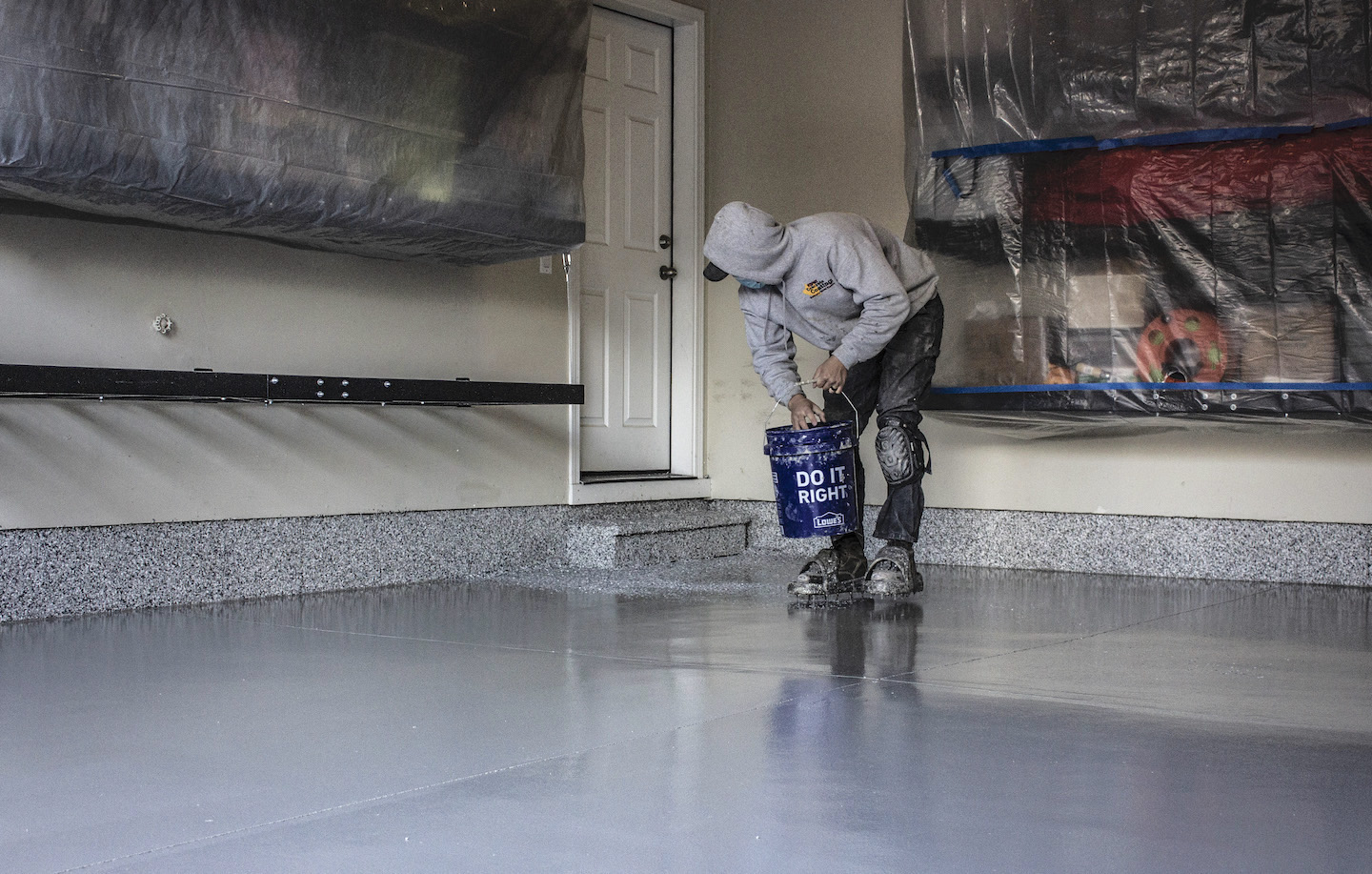
Polyurea installs in one day. The Webfoot crew arrives in the morning, grinds and preps the concrete, repairs any cracks or pitting, applies the basecoat, broadcasts decorative chips, and finishes with the topcoat all in the same workday. You can walk on it within 12 hours and park on it in 24.
For a working garage, the installation timeline alone is often the deciding factor.
Epoxy is not UV stable. Any sunlight exposure, whether from a window, an open garage door, or full outdoor application, will cause epoxy to yellow and fade. Within a year or two the color you chose at install is no longer the color you have.
Polyurea is UV stable. It holds its color and finish in direct sun, which is why it is the standard coating for pool decks, patios, and outdoor concrete in Bend, Sisters, Redmond, and Sunriver.
The aesthetic difference also matters for resale. A faded yellowed garage floor signals deferred maintenance. A clean polyurea floor signals an upgraded space.
Central Oregon swings from below freezing in winter to over 90°F in summer. Your garage floor goes through that cycle every year.
Epoxy turns brittle below 50°F. It cracks during freeze-thaw cycles, and the application itself requires a narrow temperature window, which means most contractors will not install it during winter months at all.
Polyurea stays flexible from -30°F to 300°F. Webfoot installs polyurea year-round, including through Central Oregon winters, because the chemistry does not require warm weather to cure properly.
This is where the comparison gets nuanced.
Epoxy is cheaper upfront. A DIY kit can run a few hundred dollars. A professional install runs $3 to $7 per square foot in most markets.
Polyurea is more expensive upfront. A professional Webfoot install runs higher per square foot because the materials, equipment, and labor required to install a multi-layered polyurea system are significantly more demanding.
The lifetime math reverses the picture. If you install epoxy for $3,000 and recoat or replace it every 4 years, you have spent $15,000 to $20,000 over 20 years in materials and labor, plus the inconvenience of being without your garage for a week each time. A single polyurea install in that same window costs you one project, one disruption, and one investment.
The total cost of your project will depend on the size of your floor, the condition of the existing concrete, your color and chip selections, and the prep work required. For a ballpark estimate in about 60 seconds, try our instant estimate tool.
Choose epoxy if your garage is a low-traffic, temperature-controlled, sunlight-free space, you plan to move in the next 3 to 5 years, and upfront cost is the only factor that matters.
Choose polyurea if you live in Central Oregon, your garage sees actual use, you want the floor to last as long as you own the house, and you would rather pay once for a coating that holds up than four times for one that does not.
For Webfoot customers, the choice is straightforward. We do not install epoxy because we will not warranty a coating we know is going to fail in this climate. Every Webfoot concrete coating is a multi-layered pure polyurea system backed by a limited lifetime residential warranty.
See why we tell every customer to skip epoxy: Why Garage Floor Epoxy Fails.
The full list of problems with epoxy: 6 Reasons Why You Should Never Use Epoxy On Your Garage Floor.
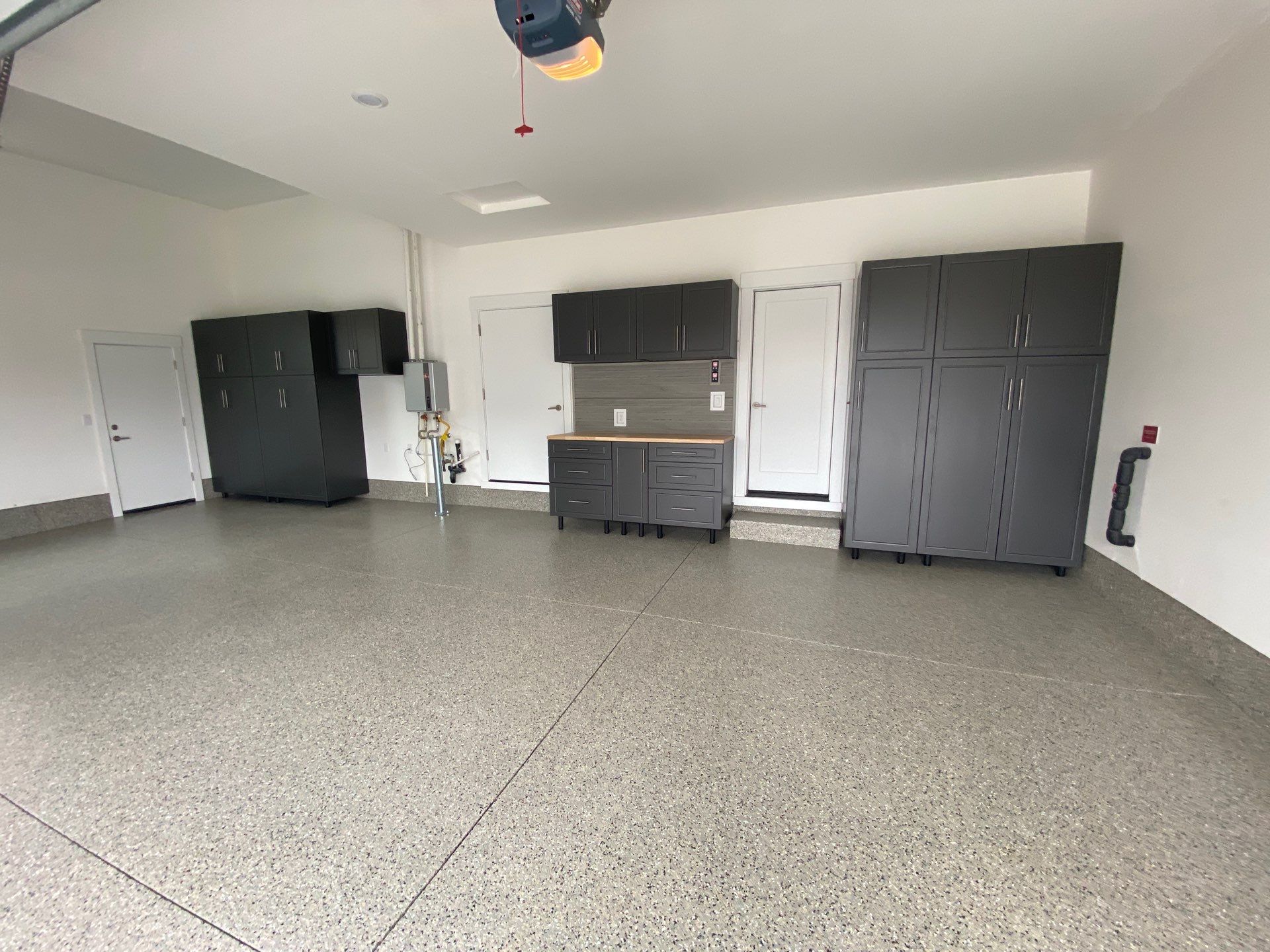
A polyurea coating job in Bend: Garage Transformation in Bend OR.
Polyurea compared to polyaspartic: Polyaspartic or Polyurea.
Service page: Garage Floor Coatings in Bend Oregon.
Webfoot installs polyurea garage floor coatings year-round across Bend, Redmond, Sisters, and Sunriver. Free estimates, lifetime warranty, one-day install.
Get a free estimate or call 541-390-0590.