5 Cost Factors of a Concrete Coating Project
Concrete coating cost depends on five things: concrete condition, product, prep, customizations, and size. Here is what each factor does to your project price.

The cost of a concrete coating project depends on five factors: the condition of your existing concrete, the type of product you choose, the prep work required, the customizations you select, and the size of the space. Generic estimates pulled from a website ignore four of those five. The fastest way to get a real number for your floor is our instant estimate tool, which asks the right questions in about 60 seconds and gives you a Webfoot-accurate ballpark before a crew ever shows up.
Here is what actually drives the price.
The slab you already have is the foundation for the coating. If the concrete is in good shape, prep is fast and the price stays predictable. If it is cracked, previously coated, soft, or holding moisture, the prep work expands and the cost climbs.
Hairline cracks are normal. Even a well-maintained slab in Central Oregon will have some surface cracking from years of freeze-thaw cycles. The size, depth, and number of cracks determines how much chase-and-fill work is needed before the coating goes down. Heavily cracked floors require flexible polyurea mending sealer to fill the cracks, which then cure to be as strong as the surrounding concrete.
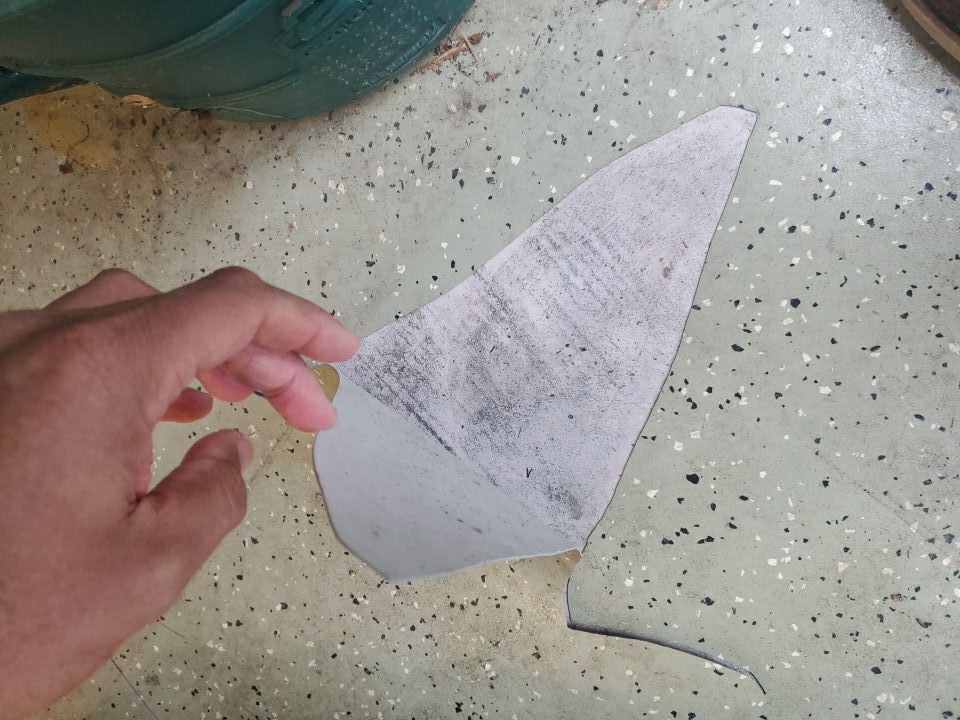
If your floor already has epoxy, paint, or another coating on it, all of that has to come off before a new system can bond properly. Removal requires polycrystalline diamond grinding tools that strip the old coating layer by layer, sometimes requiring two or three passes for thick or stubborn coatings. Carpet glue is even slower. Removal can double or triple the prep time compared to a bare concrete slab, and that time shows up in the estimate.
This one most homeowners never think about, and most contractors skip. Concrete hardness varies by age, mix, and curing conditions. The hardness determines which diamond tooling will profile the surface correctly. A contractor who does not test hardness is guessing at tooling selection, which means either over-grinding (wastes time and money) or under-grinding (the coating will not bond properly and will fail).
Webfoot uses a Moh Hardness Test Kit on every project to measure the slab before the crew arrives. If the concrete is too soft to coat at all, we will tell you that upfront rather than installing a system that is going to fail.
Concrete sitting on damp ground, in a basement, or in a garage with poor drainage holds moisture. Coating over a moisture problem traps the water under the surface and causes the coating to delaminate from below. If a moisture meter reading is above a certain threshold, the floor requires a moisture vapor barrier to be applied before the basecoat. The barrier needs its own cure time, which adds a day to the install and adds material cost. In severe cases, the barrier needs two coats.
If a contractor does not test moisture before quoting your floor, the quote is incomplete.
Material costs vary more than any other factor. The same square footage of garage can be coated with a basic DIY paint kit, a professional epoxy install, a polyaspartic-only system, or a hybrid polyurea-polyaspartic system. The product you pick is the biggest single lever on the final price, and each tier represents a meaningful jump.
The cheapest option. Big box stores carry concrete paint, basic epoxy kits, and acrylic sealers. They are designed to be applied by a homeowner over a weekend. The material cost is low. The result is also short-lived. Most DIY kits begin chipping within months because the surface preparation is rarely done correctly and the material itself is not designed for long-term performance under tires, dropped tools, or temperature swings.
The cheapest professional installation. Epoxy bonds to the surface of the concrete and creates a glossy, color-customizable finish. The chemistry has real limitations: epoxy yellows in sunlight, gets brittle in cold weather, and is prone to hot tire pickup. In Central Oregon, professional epoxy floors typically need to be recoated or replaced every 3 to 5 years.
Mid-range pricing. Many contractors offer a polyaspartic basecoat and topcoat system marketed as polyurea. Technically, polyaspartic is a slowed-down polyurea, but on raw concrete it forms only a surface bond. That surface bond fails as the slab moves over the years, and polyaspartic-only systems typically delaminate within 3 to 7 years.
The premium option, and the one Webfoot installs. A pure aromatic polyurea basecoat bonds chemically with the moisture inside the concrete. A polyaspartic topcoat locks in color, adds UV stability, and gives the floor a glossy finish. The hybrid system installs in one day, lasts 15 to 20 years, and carries a limited lifetime residential warranty.
The upfront cost is higher than epoxy or polyaspartic-only. The lifetime cost is significantly lower because you install once instead of three to five times over the same period.
Prep is the single biggest difference between a coating that lasts twenty years and a coating that fails in three. The chemistry of the product matters, but the bond between the coating and the concrete is what determines lifespan. That bond is created during prep.
There are two prep approaches in the industry. The fast, cheap one is acid etching, where a mild acid solution is poured on the concrete to roughen the surface. It is fast, inexpensive, and produces a weak profile. The right one is diamond grinding, where heavy industrial grinders mechanically profile the concrete to expose a clean, porous surface that the coating can bond into.
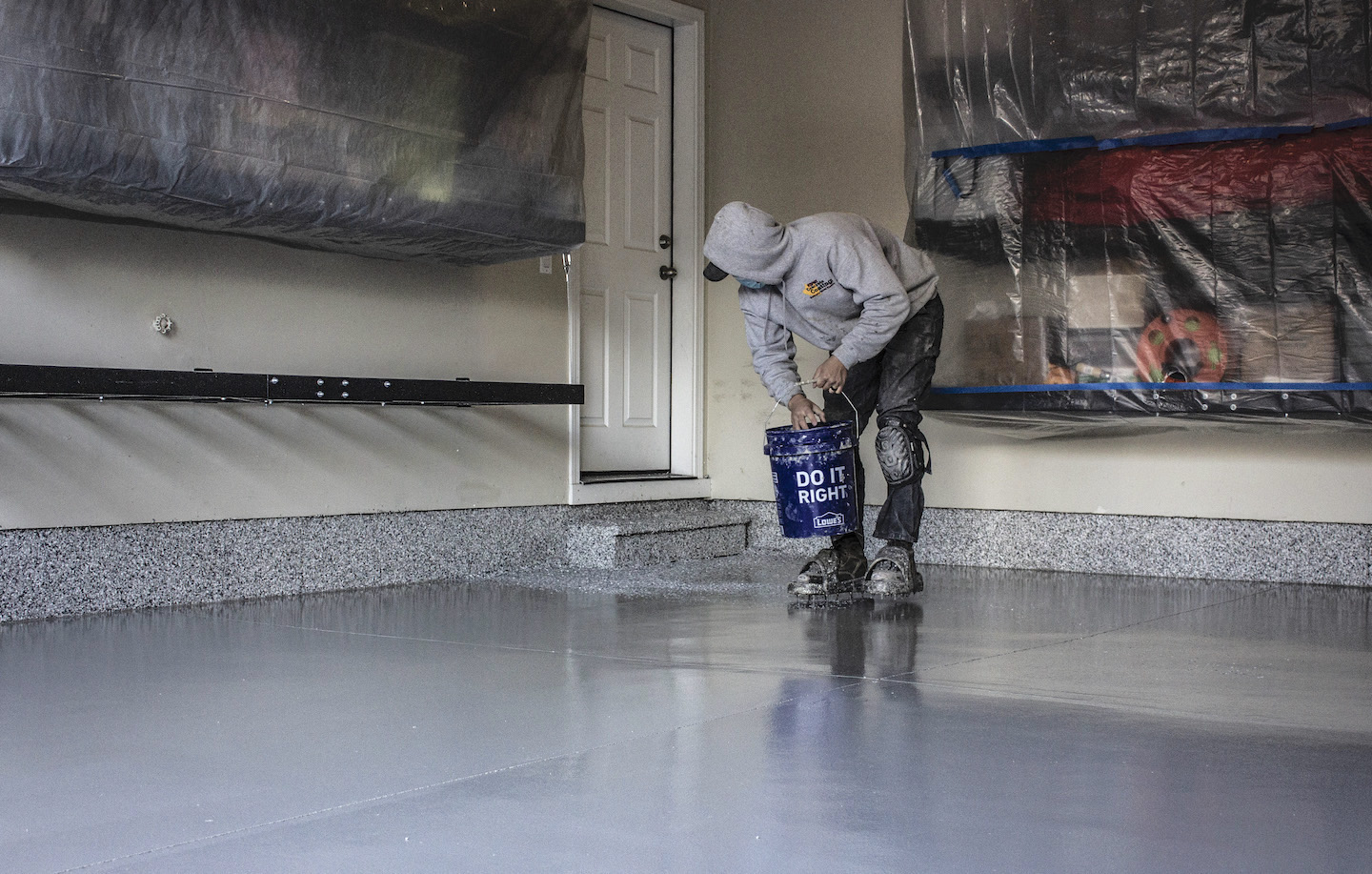
Webfoot grinds every floor. Our crews bring 650 to 700 pound diamond-tooled grinders, a 30-inch for the open spans and a 7-inch for corners and edges. After the grinding pass, we sweep, vacuum, and squeegee the surface clean using triple HEPA-filtered vacuums to keep dust out of your home. Then we fill cracks and damaged areas with polyurea mending sealer. The repaired sections cure to be as strong as the surrounding concrete.
This level of prep adds time and labor cost to the project. It also creates the bond that makes a lifetime warranty possible. If a quote you receive seems unusually low, ask the contractor what their prep process is. Acid etching alone is often a sign of a coating that will fail early.
The base coating system covers the floor itself with a standard chip blend. Anything beyond that is a customization.
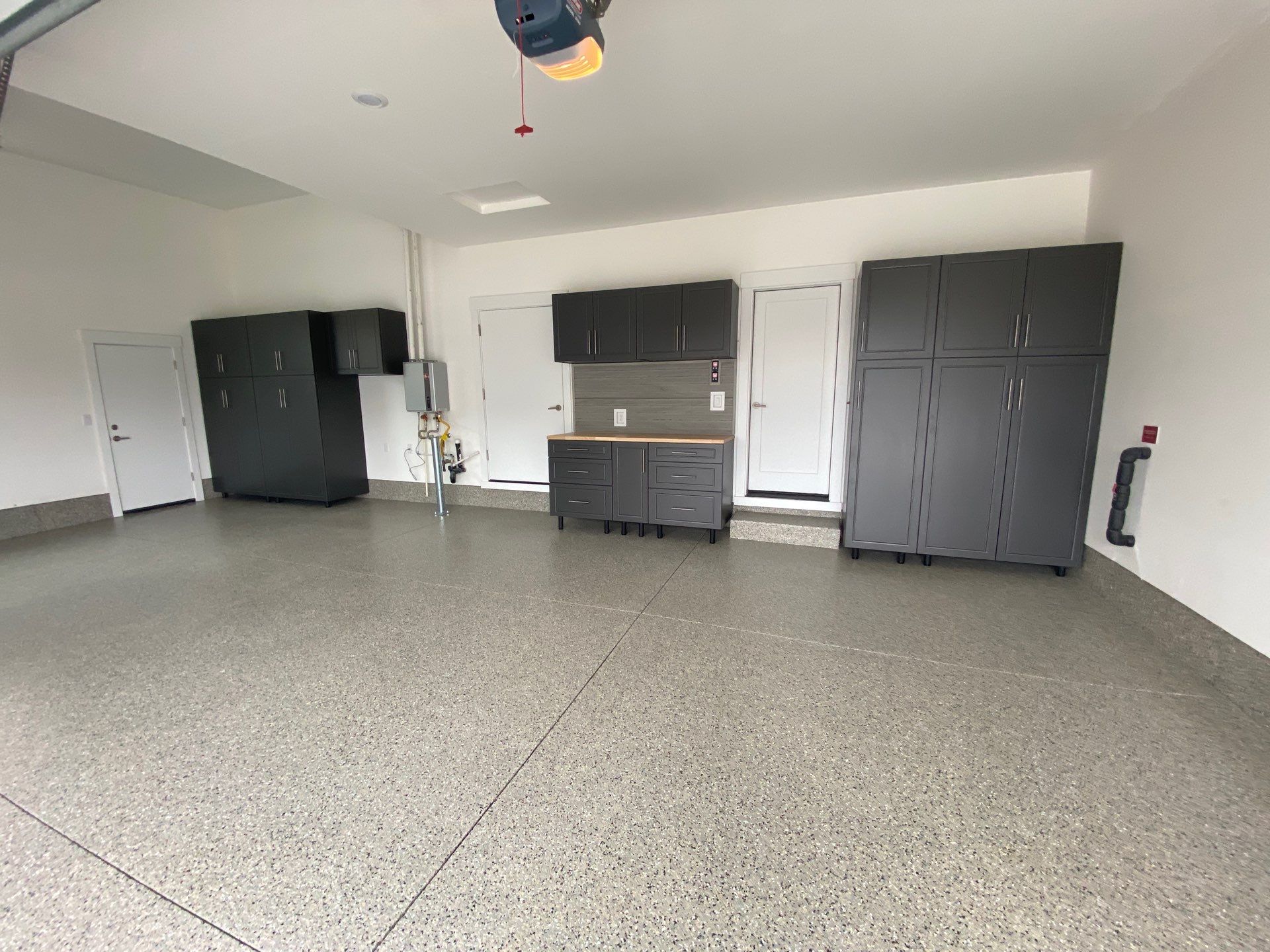
Standard chip blends are included in the base price. Custom color combinations, neon chips, and metallic flakes add a flat fee because the chips have to be sourced and blended specifically for your floor.
Brand logos, custom patterns, and glitter additives require additional labor and often an extra day on site to install correctly. These options add significant cost because the install team needs additional time to lay out the pattern and broadcast the chips precisely.
Most concrete slabs have expansion joints where the slabs meet. Standard coating installs leave those joints visible. A seamless floor uses a flexible polyurea joint filler to fill the seams before the basecoat goes down, creating an unbroken visual surface. This adds cost per linear foot of seam.
For pool decks, garage workout spaces, or any wet-area concrete, a slip-resistant additive can be mixed into the topcoat. Silica sand is the most common, available in light grit (Shark Grip), heavy grit (4095), or a blend. This adds a small per-square-foot cost and is required for pool deck applications.
The floor itself is one surface. Verticals (the short walls that connect the floor to the room), garage aprons (the slab extending out from the garage door to the driveway), and steps are coated separately and priced separately. Webfoot always includes the garage apron in the base price because a coated floor with an uncoated apron looks unfinished. Verticals and steps are priced per linear foot and per unit respectively.
Bigger floors cost less per square foot. Smaller floors cost more per square foot.
That sounds backwards until you think about what goes into the install. A small space and a large space need the same crew, the same setup, the same equipment, and the same cure time. The fixed costs do not scale down. So when those costs spread across a smaller space, the per-square-foot rate is higher than the same costs spread across a larger one.
A two-car garage is the most common job. A three-car garage is more total dollars but a lower per-square-foot rate. A small mudroom or laundry concrete pad will be a higher per-square-foot rate because the fixed costs are spread over less area.
This is also why getting a real estimate on your specific space matters. A per-square-foot rate quoted as a general number does not account for whether your project is a one-car garage, a basement, a workshop, or a 1,400 square foot shop floor.
Generic price ranges are useful for setting expectations, but every floor is different. The combination of concrete condition, square footage, customizations, and chosen product creates a unique number for your project.
Our instant estimate tool asks the right questions in about 60 seconds and produces a Webfoot-accurate ballpark for your specific space. It accounts for all five factors at a level no generic calculator can match.
Try the instant estimate tool. Or if you would rather have a Webfoot pro walk your space, schedule a free in-home estimate and we will measure, test, and price your project the right way.
The premium hybrid system Webfoot installs: Best Garage Floor Coating in 2026: 4 Options Compared.
Polyurea vs epoxy head-to-head: Polyurea vs Epoxy Garage Floor Coatings.
Polyurea vs polyaspartic compared: Polyurea vs Polyaspartic: Which Garage Floor Wins?
Why epoxy fails so consistently: 6 Reasons to Never Use Epoxy on Your Garage Floor.
Service page: Garage Floor Coatings in Bend Oregon.
Webfoot installs hybrid polyurea and polyaspartic concrete coatings year-round across Bend, Redmond, Sisters, and Sunriver. One-day install, lifetime warranty, free estimates.
Get a free estimate or call 541-390-0590.