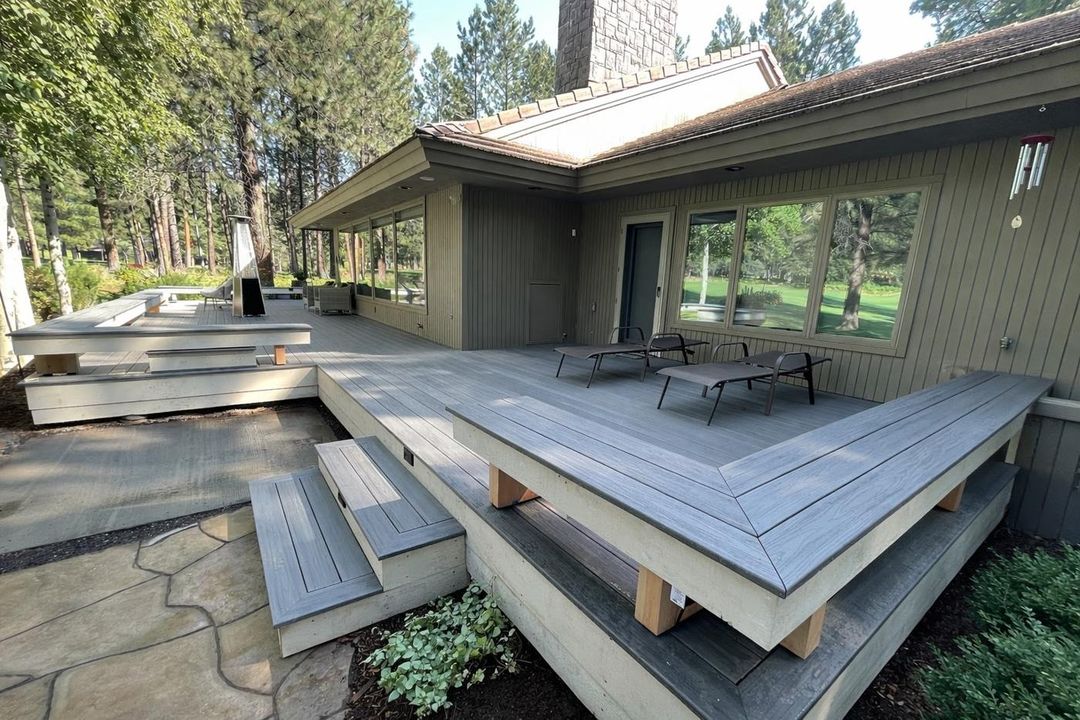
Composite Deck Builders in Bend and Redmond

Ready to get decked out?

TrexPro Platinum and TimberTech Platinum certified. We build composite decks across Bend, Redmond, Sisters, and Sunriver, framed for the snow load at your address, and we handle the county permit and the HOA design review instead of handing it back to you.

A house with a deck and a flower pot.

Last updated: 

2x
Platinum certified
TrexPro Platinum and TimberTech Platinum. Most Central Oregon builders hold neither.
102
Decks built 2025 to 2026
Real projects behind the prices further down this page.
30+
Year lifespan
Composite outlasts wood by five years and skips the staining entirely.
0
Stain weekends
No sanding, no sealing, no spring ritual. Wash it and move on.

What a composite deck costs in Central Oregon

Most builders will not put a number on a page. Here are ours. These come from 102 deck builds and replacements we completed between January 2025 and October 2026. They are not quotes. Every deck is different, and an accurate price takes a free on-site bid.

$35,400
Typical deck project
$14,100 to $64,000
Middle half of projects
102
Decks built or replaced

Where 102 Central Oregon decks landed

Under $10,000
12%
$10,000 to $20,000
24%
$20,000 to $30,000
9%
$30,000 to $40,000
13%
$40,000 to $50,000
11%
$50,000 to $75,000
14%
$75,000 to $100,000
7%
$100,000 and up
12%
Deck prices split in two. About a third land between $10,000 and $30,000: smaller decks, and new boards on a frame that is still sound. Another 38% land between $30,000 and $75,000, mostly full builds. Largest single project: $239,400. Composite sits at the upper end of whatever range your project falls into. See the full breakdown on our pricing page.

Built to last

When it comes to building your deck, we never take shortcuts. We ensure everything is built to code, the right way. Here are some of the things we do to stand out from the rest.

Our deck construction includes:
  • Picture Framing: This provides a professional, clean finish, framing in the decking, benches, and steps.

  • Breaker Boards: These eliminate the need for random butt joints, ensuring a polished appearance.

  • Hidden Fasteners: Utilized on composite decks, these fasteners create a seamless look between boards, minimizing visible screws.

  • Concrete Footings: We dig footings below the frost line for stability, ensuring your deck is properly supported. Unlike pier pads, which can shift over time, our footings prevent deck sagging or failure.

  • Finished Steps: Every deck includes finished steps with treads, risers, and optional handrails, providing safe and convenient access.

Two men working on a wooden deck.

Composite or wood in Central Oregon

High-elevation UV, a 40-degree day-to-night swing in summer, and freeze-thaw cycling all winter. Central Oregon is harder on a deck than the temperature suggests. Here is how the two materials actually compare here.

Swipe the table to see the wood column

 CompositeNatural wood
Lifespan30+ yearsAbout 25 years, maintained
UpkeepWash itSand, clean, and stain on a cycle
Up-front costHigherLower
Cost over 20 yearsLowerHigher, once you count stain and labor
UV at elevationHolds colorGreys, then needs stripping
Freeze-thawStableCups, cracks, pops fasteners
Splinters and rotNeitherBoth, eventually
Fire ratingRated, varies by lineVaries by species and treatment
Summer surface heatWarmer, cooler lines availableCooler
Looks like woodClose, and getting closerIt is wood

We build both, and we do not keep decking in stock, so nothing in the yard is pushing the recommendation. If you love the look of natural wood, say so. We will tell you honestly what you are signing up for.

Watch the process

Pick the time that works best for your bid appointment. We'll save your spot and follow up to confirm the time you selected.

The part you will never see

A deck fails from the frame up, not the boards down. Most of what you pay a builder for sits underneath the part you walk on.

Footings below the frost line
Poured concrete, dug below frost depth. Not pier pads set on grade. Pads shift when the ground heaves, and the ground here heaves every year.
Framing sized for your snow load
Posts, beams, and joists spec'd for the snow your address actually gets. Sunriver is not Redmond.
Joist spacing to manufacturer spec
Composite needs tighter spacing than wood, and tighter still on a diagonal layout. Get this wrong and the boards telegraph every joist.
Hidden fasteners
Boards lock from the side, so no screw heads read across the surface.
Breaker boards
They remove the random butt joints that make a long deck look pieced together.
Flashing where the deck meets the house
That joint is where rot starts on a deck that otherwise looks fine. We flash and drain it properly.
A final inspection before we call it done
Every project, every time.

What we find under decks that looked fine

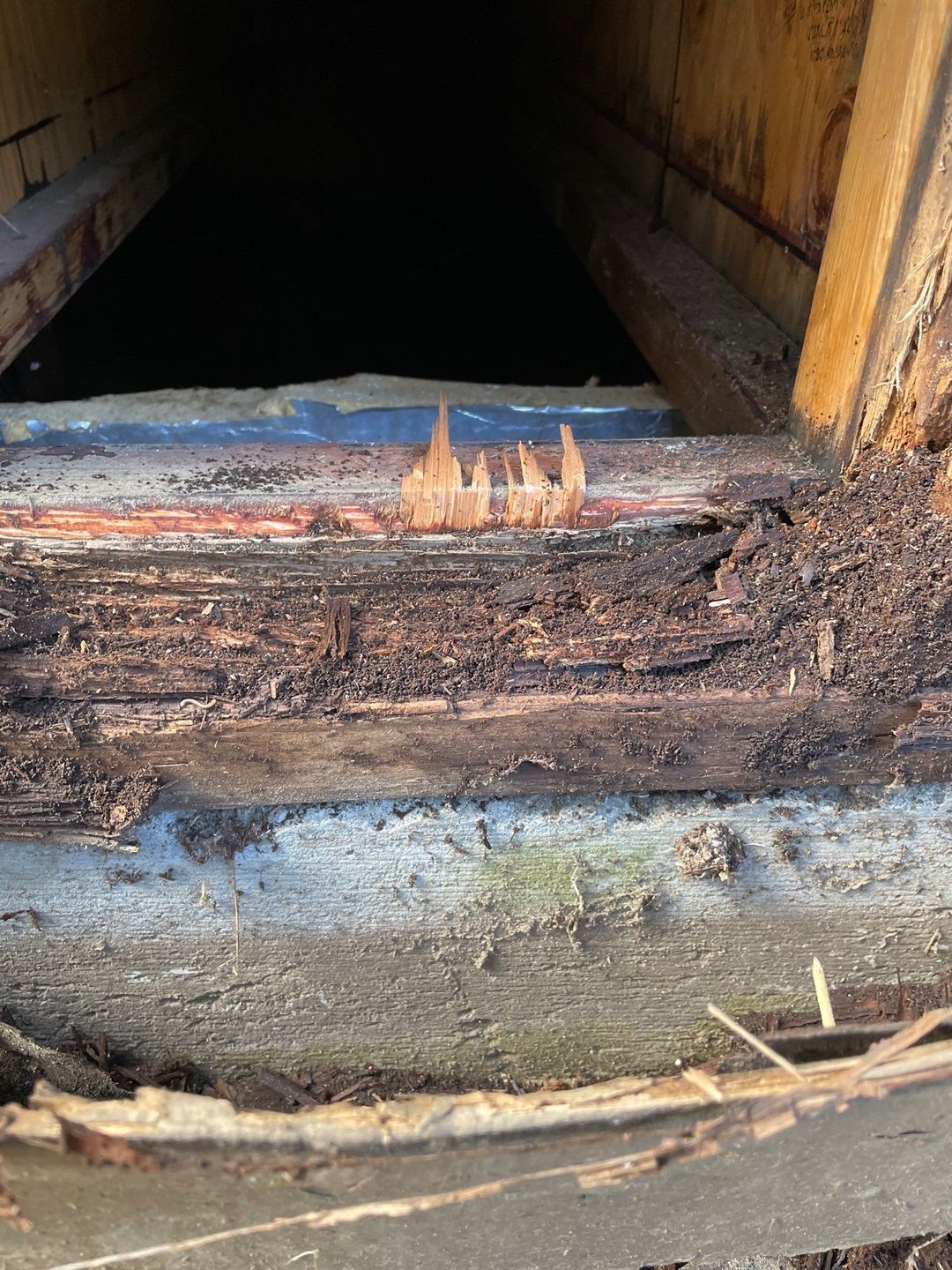
These are real Central Oregon decks. In every one of them the surface looked acceptable from above.
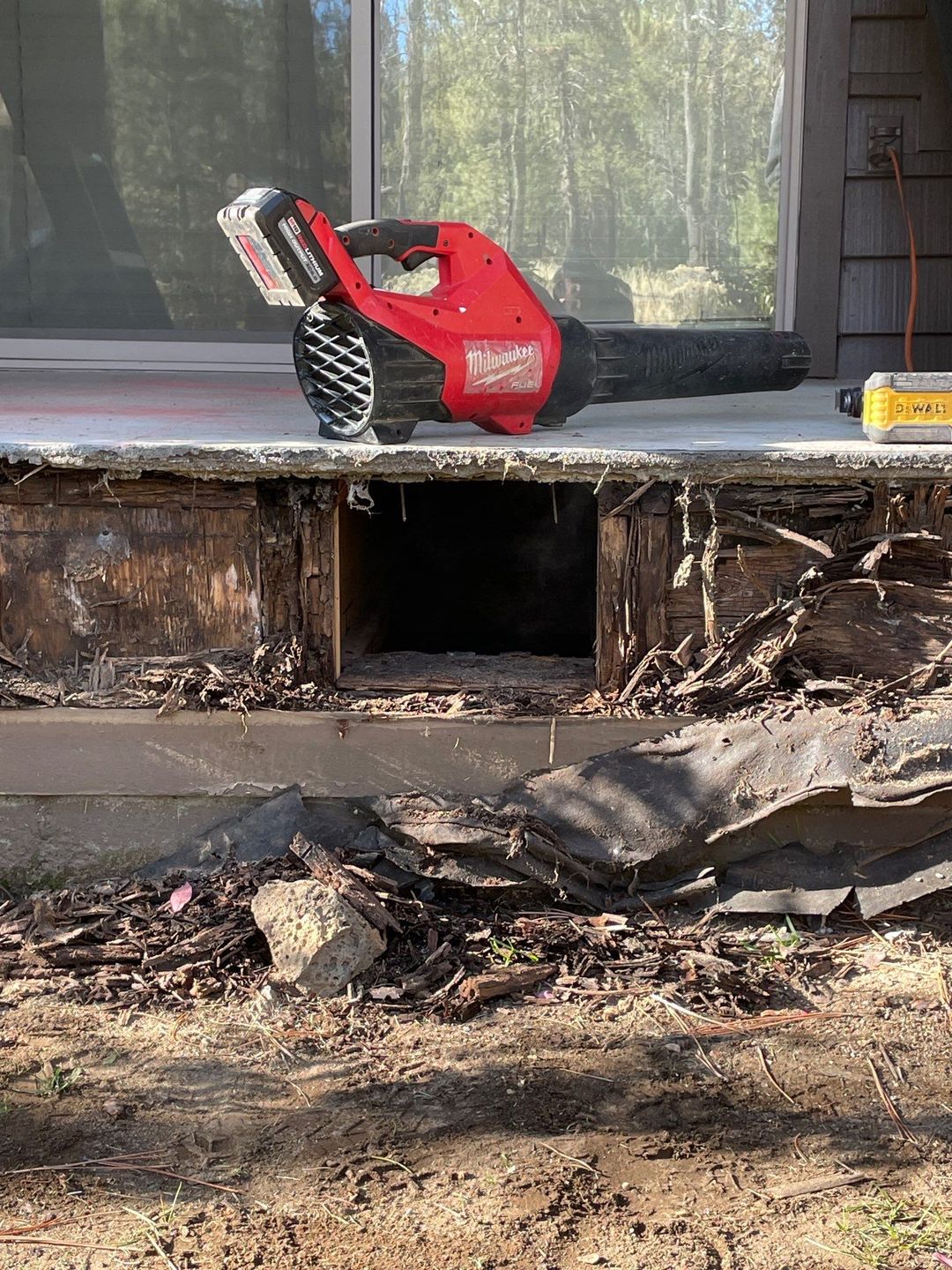
Deck ledger board opened up to reveal framing rotted through beneath an intact deck surface
The ledger opened up. The boards on top were still walkable.
Close view of a deck beam rotted and splintered through its full depth
A beam rotted through its full depth. This is what carries the snow.
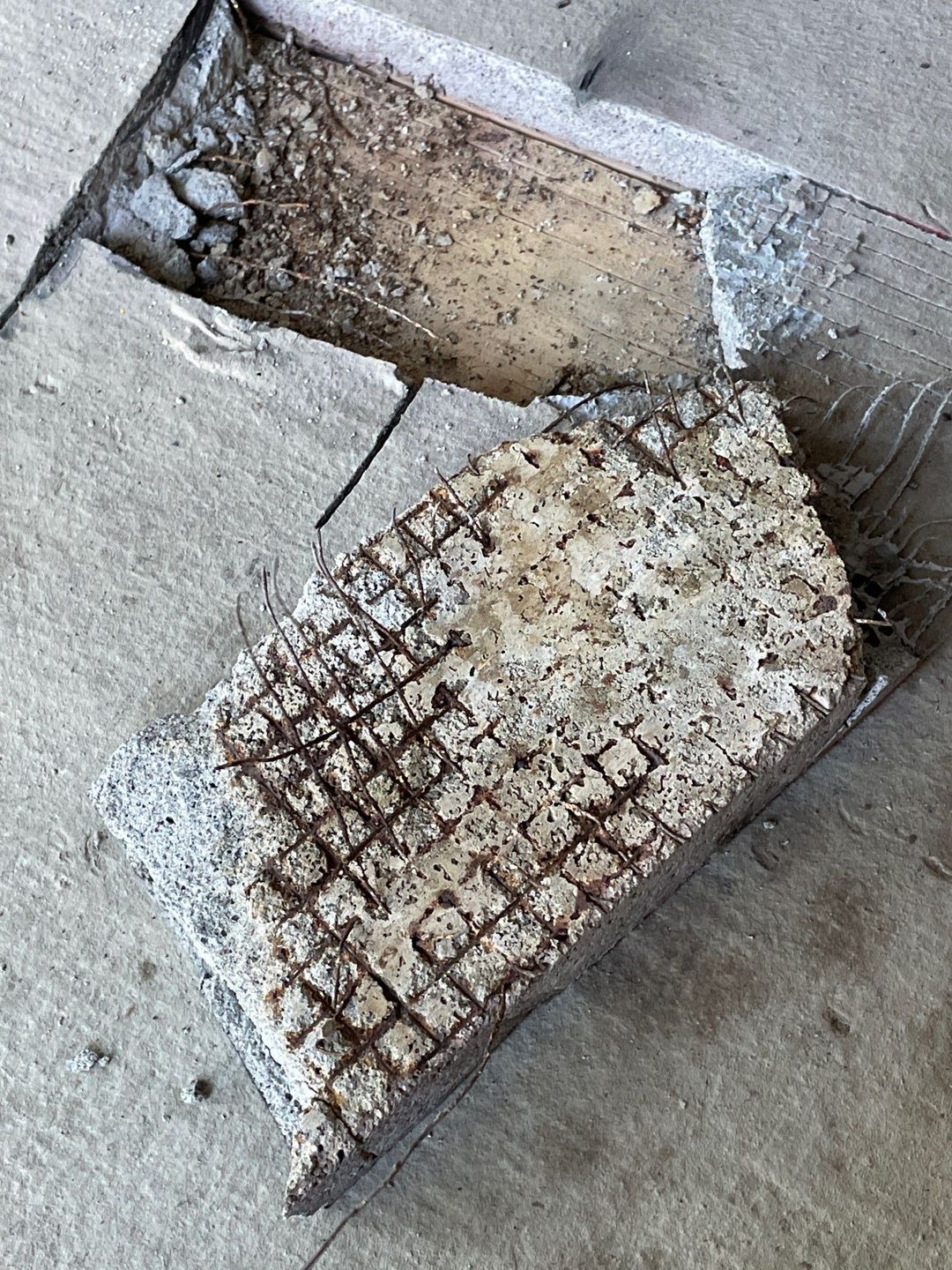
Spalled concrete with rusted rebar pushing through, removed from under a failing deck
Spalled concrete, rebar rusting out. Pulled from under a failing deck.
Ask about snow load
Ask any builder what snow load they framed your deck for. If the answer is vague, keep calling. Snow load is a framing question, not a decking question, and no board you choose changes what the structure underneath has to carry. A deck framed for Bend and built in Sunriver is under-built, and you will not find out in a mild winter. It is the single most common thing we see done wrong on decks built by somebody else.

Before and after

What a composite deck looks like when it is done, and what it took to get there. Three Central Oregon decks we finished this fall, all of them tear-outs.
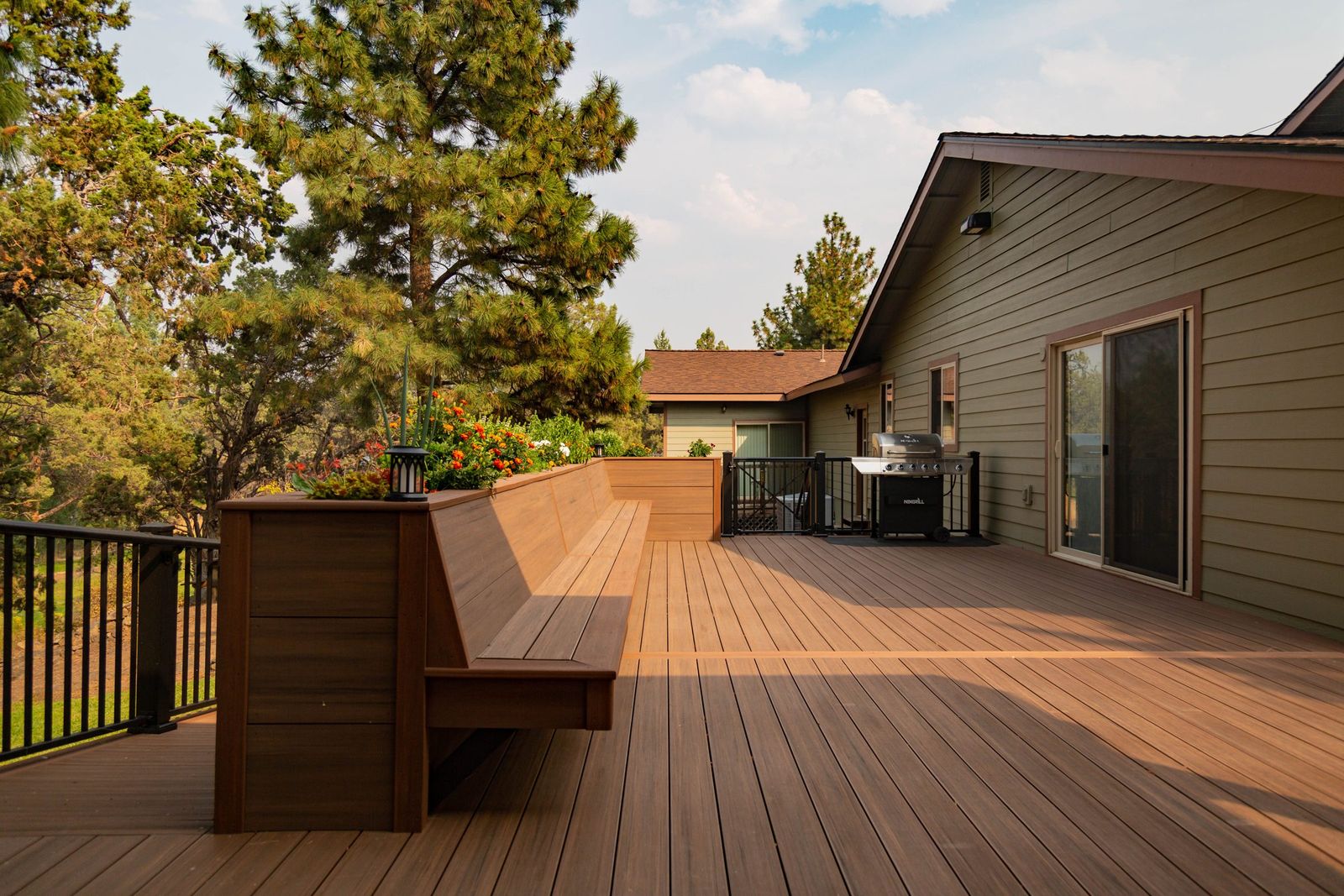
TimberTech composite deck with a built-in bench, planter boxes, and black metal railing in Central Oregon
TimberTech composite with a built-in bench, planters, and black metal railing. Twenty years from now it will still look like this, and you will never have stained it.
Bend · full tear-out and rebuild · composite with black metal railing
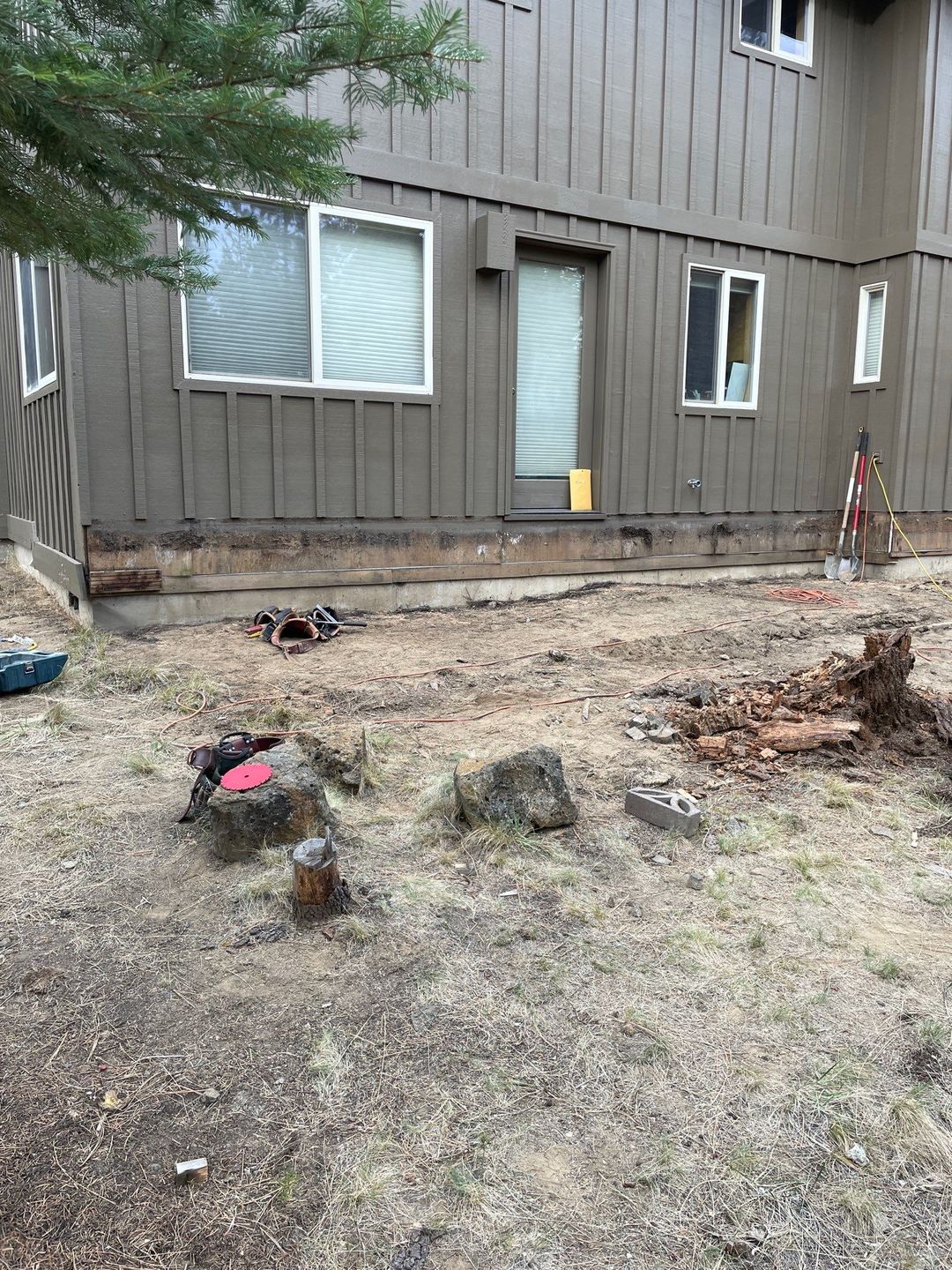
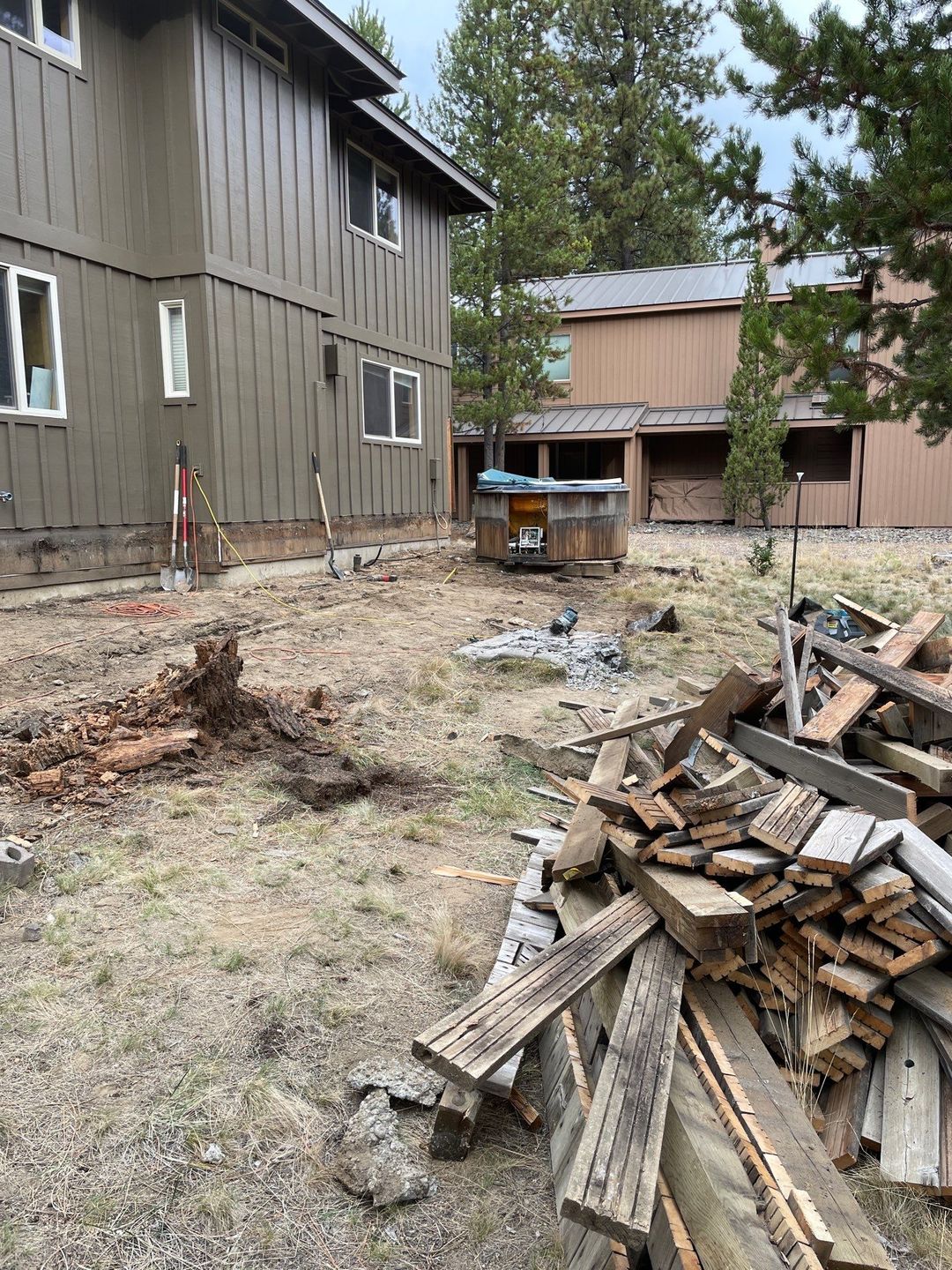
BeforeOld wood deck torn out and stacked in a pile beside a Bend, Oregon home before a composite deck rebuild
The old deck came out in pieces. Everything below grade came out with it.
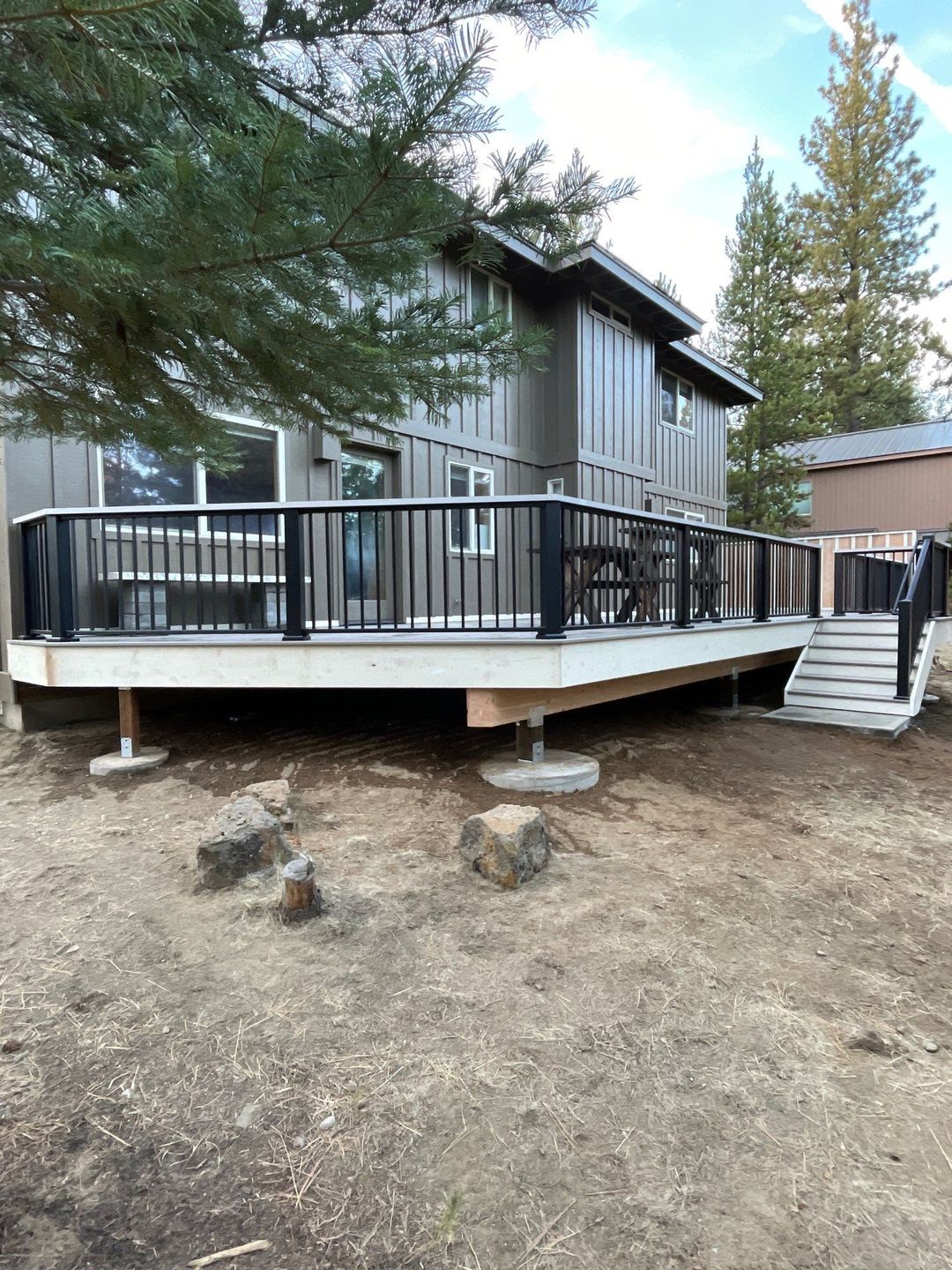
AfterFinished composite deck in Bend, Oregon with black metal railing and poured concrete footings visible underneath
Poured footings, sized for the snow at this address. You can see them from here.
Bend · ground-level entry deck · composite
BeforeBare ground and the old ledger line on the siding where a deck was removed in Bend, Oregon
Bare ground, and the ledger scar the old deck left on the siding.
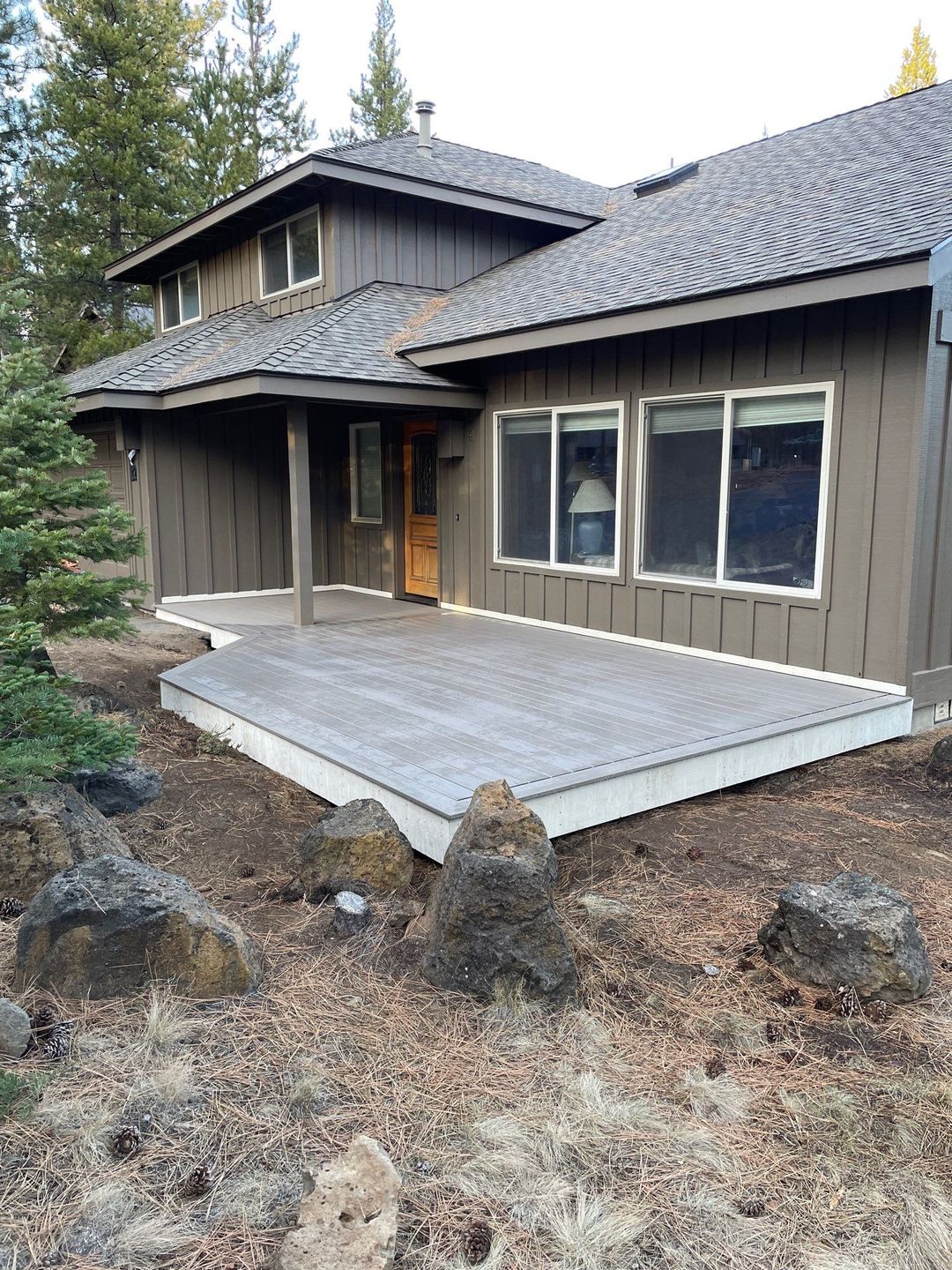
AfterGround level composite entry deck at a Bend, Oregon home surrounded by lava rock landscaping
Low, wide, and set into the lava rock. No railing required at this height.
Bend · second-story deck · composite with metal railing and composite stair treads
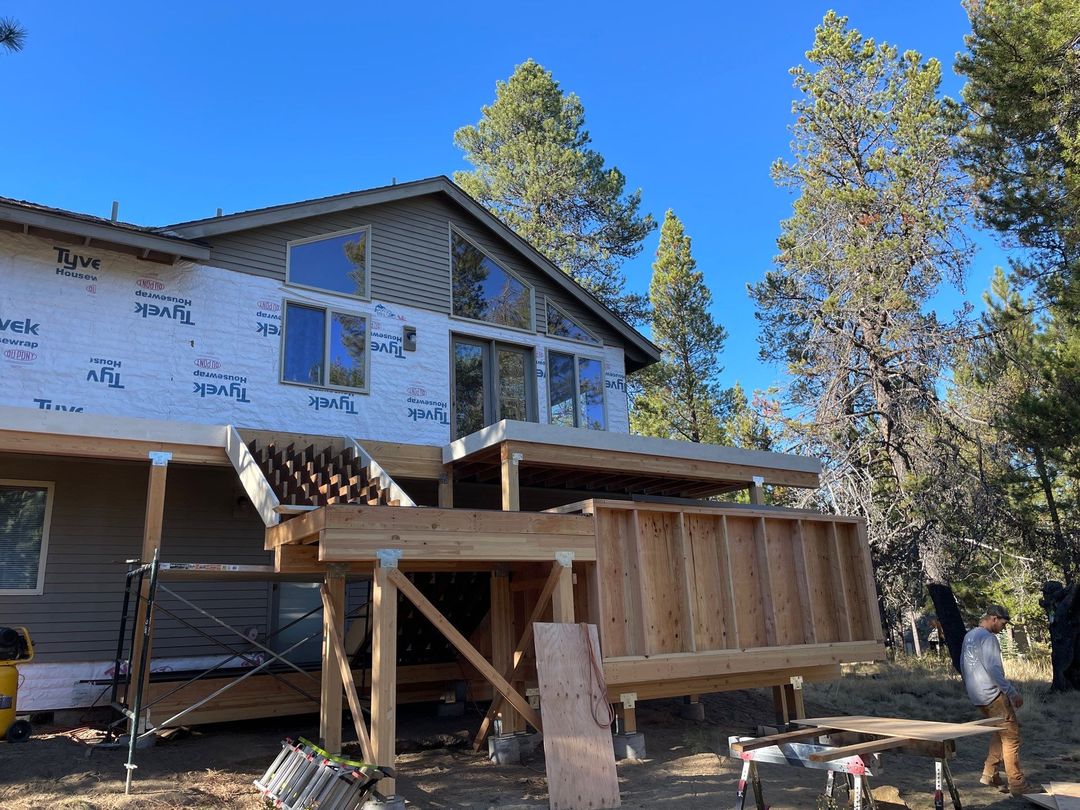
FramingSecond story deck framing with posts and beams going up on a Central Oregon home
Taller posts, bigger beams. Height is one of the three things that moves the price.
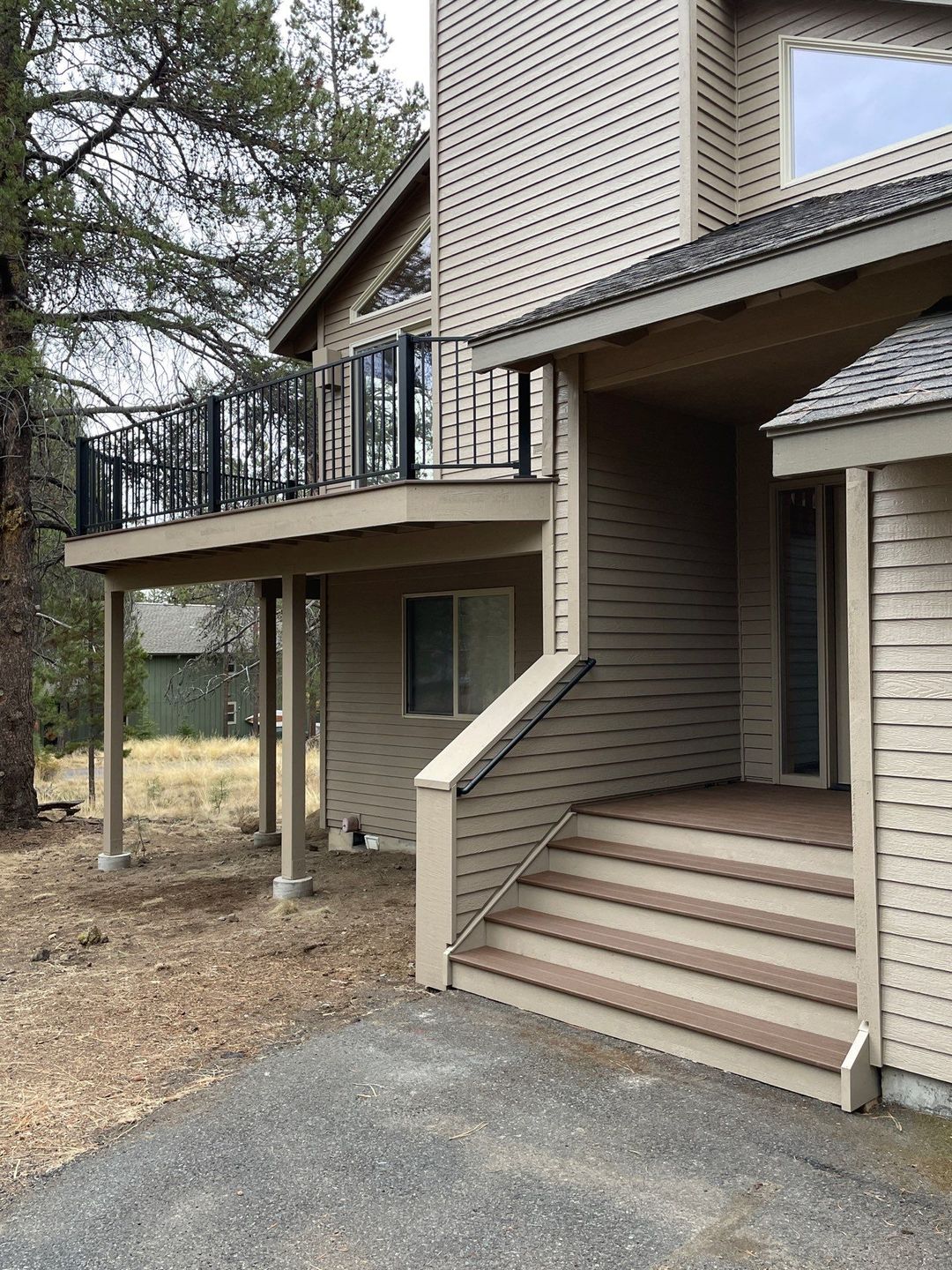
FinishedFinished second story composite deck in Bend, Oregon with black metal railing and composite stair treads
Composite treads on the stairs, not wood. They get the same winter the deck does.
Details worth looking at
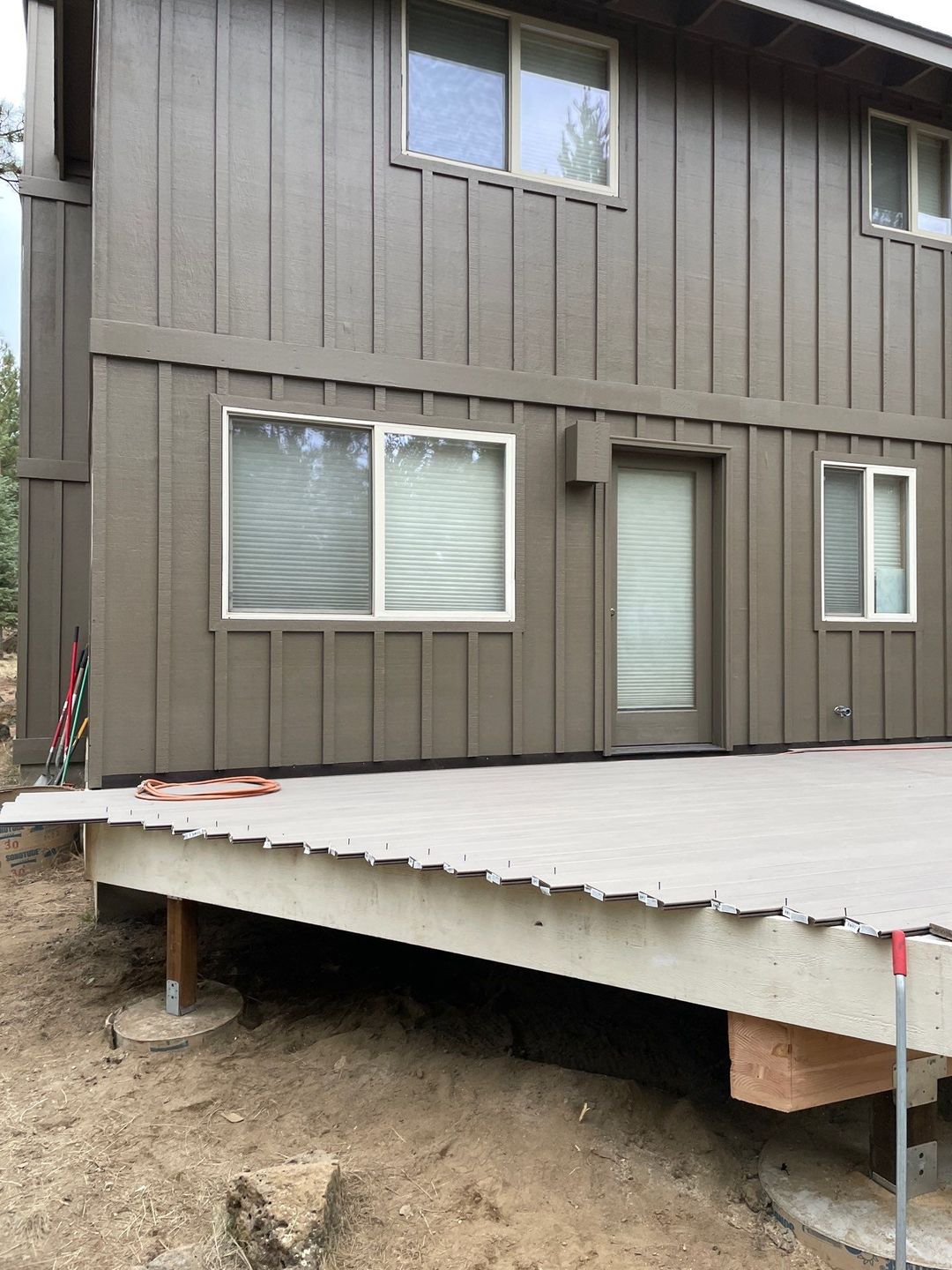
Composite deck boards being installed with hidden fasteners visible along the open edge
Hidden fasteners going in. No screw heads will read across this surface.
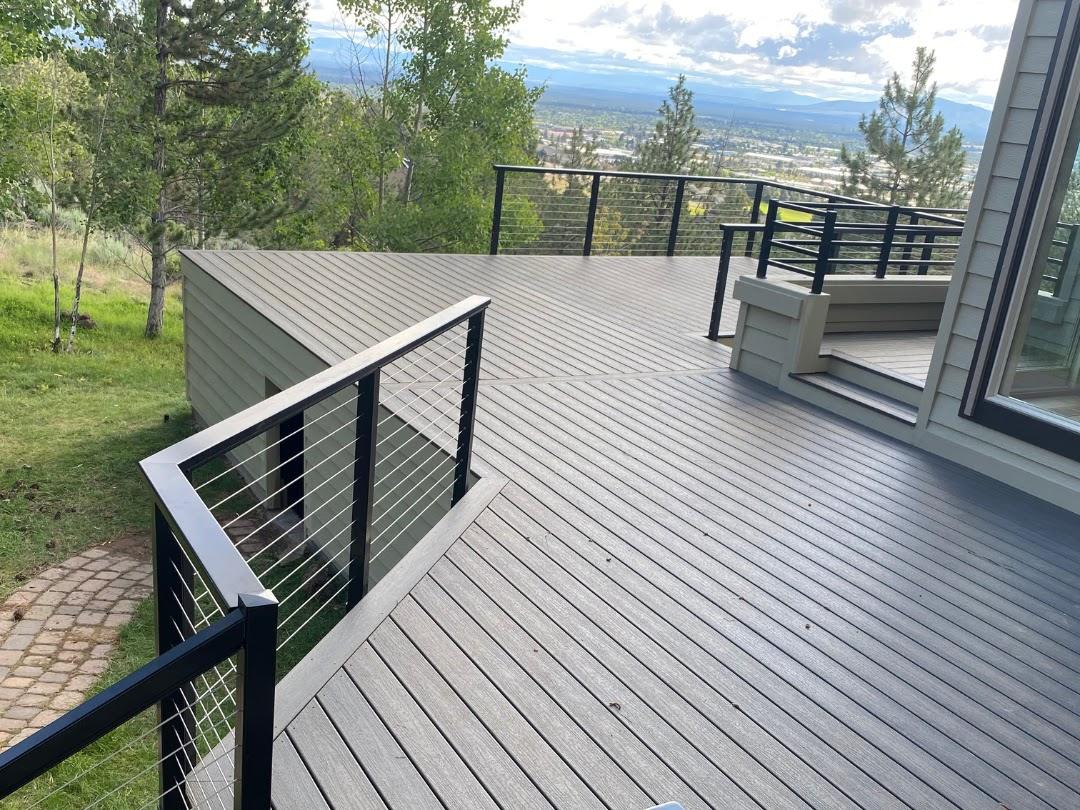
Composite deck with black cable railing overlooking the Central Oregon valley on a clear summer day
Cable railing. Costs more than wood balusters and keeps the view.
Finished composite deck wrapping a Central Oregon home in summer, with wide steps down to a flagstone patio and a green lawn beyond
Wide steps instead of a railing run, wrapping to the patio.

See what our customers say

Which deck material should you choose?

While composite decking holds up to Central Oregon’s severe weather better, we also love the beauty of natural wood. It’s really all up to you… but rest assured we’re experts in building both!

A deck with a table and chairs and a fire pit.

Benefits of Composite Decking

  • Durability: Crafted from a blend of wood and plastic, it withstands the elements and is resistant to wear and tear, insect damage, mold, and even fire!
  • Low-Maintenance: Say goodbye to staining, sealing, and board replacement. It requires minimal upkeep and is resistant to mold and mildew.
  • Eco-Friendly: Made from recycled materials, it's a sustainable choice that reduces environmental impact.
  • 50-Year Warranty: Enjoy peace of mind with a warranty against fading and staining, ensuring lasting beauty for years to come.
  • Ease of Cleaning: With simple soap and water, maintenance is a breeze.
  • Aesthetic Variety: Choose from a range of colors and styles to perfectly complement your home's exterior.

Benefits of wood decking

  • Natural Beauty: Wood decks offer a timeless, natural aesthetic that enhances the charm of any outdoor space.
  • Versatility: With various types of wood available, you can choose the one that best suits your style and budget.
  • Warmth and Comfort: Unlike other materials, wood provides a warm and comfortable surface for walking and lounging barefoot.
  • Easy to Repair: Damaged boards can be easily replaced, extending the lifespan of your deck with minimal hassle.
A wooden deck with two chairs on it.

If you’re unsure about which material is right for you, our carpentry experts are here to help!

Permits and design review, handled

This is the part other builders hand back to you. We coordinate Deschutes County permitting county-wide, and we prepare the design review package for communities that require one.

Step 01
We measure and draw
Site walk, measurements, and a 3D rendering so you see the deck before anyone builds it.
Step 02
Design review, if your neighborhood has it
Sunriver, Caldera Springs, Eagle Crest, Discovery West, Tetherow. We prepare and submit the package.
Step 03
County permit
We coordinate your Deschutes County permit. Most new decks need one.
Step 04
Build
Footings, frame, decking, railing, stairs. Crew on time, space protected, cleaned up daily.

Build approval time into your schedule, not your frustration. Review boards meet when they meet, and that is usually the longer part of the calendar. Winter is a good time to design, permit, and land on the spring build schedule. In Sunriver we handle the SROA submittal start to finish, and you can see how that process runs on our Sunriver deck builder page.

Frequently asked questions

What a deck costs, how long it takes, what permit you need, and what snow load we frame for. The questions Central Oregon homeowners actually ask us, answered straight.

What does a composite deck cost in Bend, Oregon?

Composite decking is ideal for durability and low maintenance, while treated wood offers natural beauty but requires regular upkeep. Proper care of deck boards, including sanding, cleaning, and staining, is essential for maintaining a wooden deck. Choose between the two materials based on your preferences.

How long does it take to build a composite deck?

Yes and no—it depends on your specific project. You don’t need a permit if your deck is less than 30 inches off the ground, has three stairs or fewer, or if you’re simply replacing the surface while keeping the existing substructure intact. However, permits are required for larger or elevated decks, as well as for projects involving significant structural changes. Reach out to us for a quote and consulting on permitting!

Do I need a permit to build a deck in Deschutes County?

It depends on the project. You generally do not need a permit if the deck is less than 30 inches off the ground, has three stairs or fewer, or if you are replacing only the surface and keeping the existing substructure intact. Permits are required for larger or elevated decks and for significant structural changes. We coordinate Deschutes County permitting county-wide, so assume a permit is required and let us confirm it for your project.

What snow load do you frame a deck for in Central Oregon?

We size posts, beams, and joists for the ground snow load at your specific address, which varies across Central Oregon. Snow load is a framing question, not a decking question, so no board choice changes what the structure underneath has to carry. A deck framed for Bend and built in Sunriver is under-built. This is the single most common thing we find done wrong on decks built by someone else.

Which Trex and TimberTech decking lines can I choose from?

All of them. We do not keep decking in stock, so there is no inventory pushing the recommendation. We order the line that fits your project, your budget, and your exposure. Trex runs from Enhance at the value end through Select, Transcend, Transcend Lineage, and Signature at the top, with limited residential warranties of 25, 35, and 50 years by tier. TimberTech splits into advanced PVC and composite collections. We bring real samples to the bid so you can see them in your own light against your own siding.

What is the lifespan of a composite deck versus a wood deck?

Composite decks last 30 or more years with minimal maintenance, typically just washing. Wood decks last around 25 years with regular sanding, cleaning, and staining. Wood costs less up front and more over time. In Central Oregon, high-elevation UV and freeze-thaw cycling are harder on wood than the temperature alone suggests.

Can you build a deck in the winter in Central Oregon?

Yes. Footings and framing go in through most of the winter here. Hard frozen ground and deep snow can push a start date. Winter is a good time to design, permit, and land on the spring build schedule.